Caves at Carrowkeel
The megalithic structures in County Sligo are often located in limestone areas where natural caves occur. In total, there are some 40 caves to be found between Carrowkeel, Kesh Corran and Knocknarea. It may well be that these areas were sacred to the mesolithic hunter gatherers who populated these lands after the ice age.
As mentioned several times in these webpages, megalithic chambers are really artifical caves, built in areas that were already hallowed and sacred to the mesolithic and neolithic people. There are some seven caves to be found at Carrowkeel.
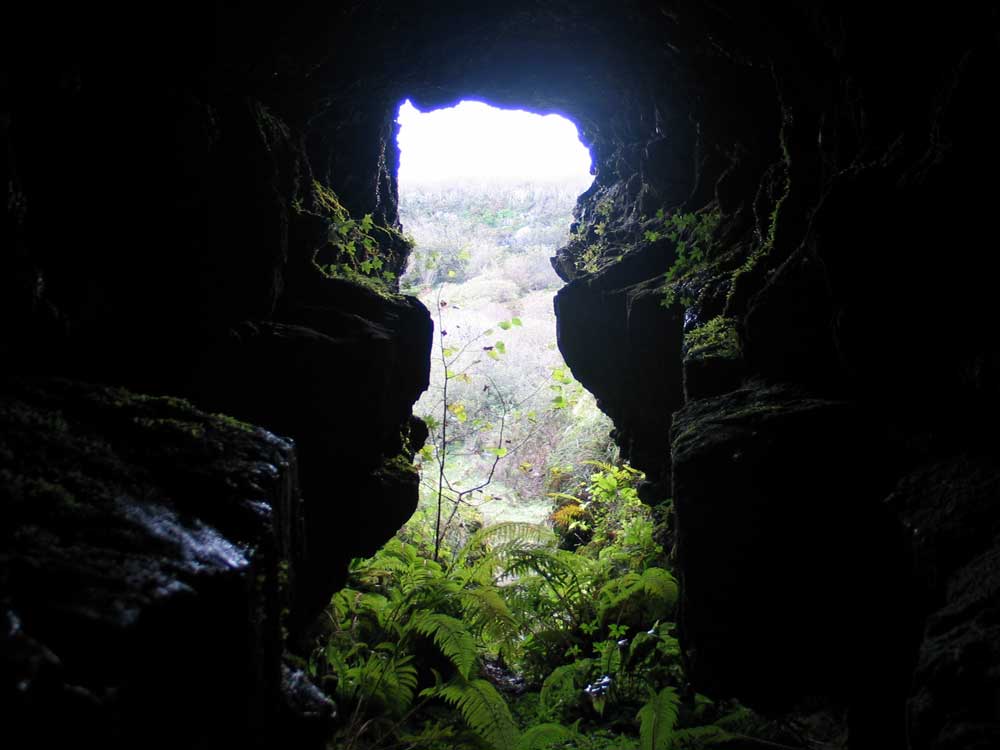
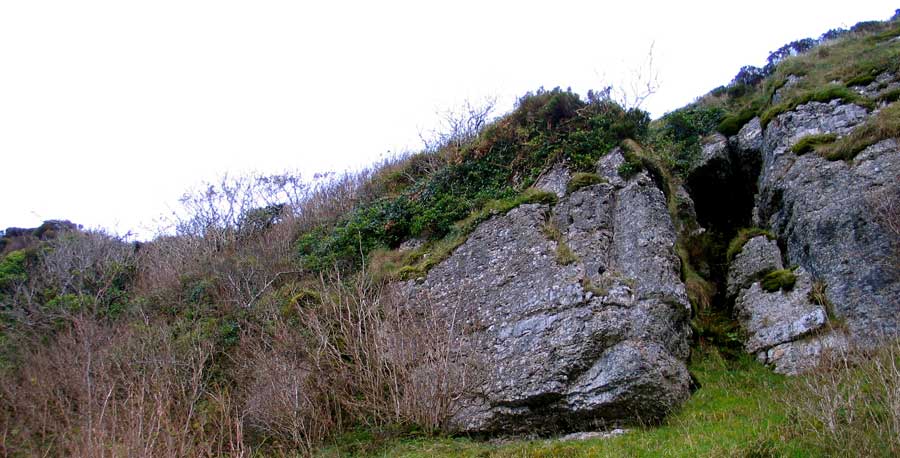
Four caves are found in the townland of Carricknahorna about 1 km to the south of Carrowkeel. There is also a strange stone age structure there in the valley: locally known as the megalith, it may be a dolmen of some kind. It is formed from very weathered chunks and slabs of limestone. Just by the megalithic structure is the large boulder known as the Stirring Rock, a disturbed rocking stone.
Above on the ridge to the west is a large erratic standing stone, visible from several miles around the southwest side of the mountains. That these enegmatic and probably very ancient stones are found right beside the caves may indicate that they are the oldest of monuments at Carrowkeel.
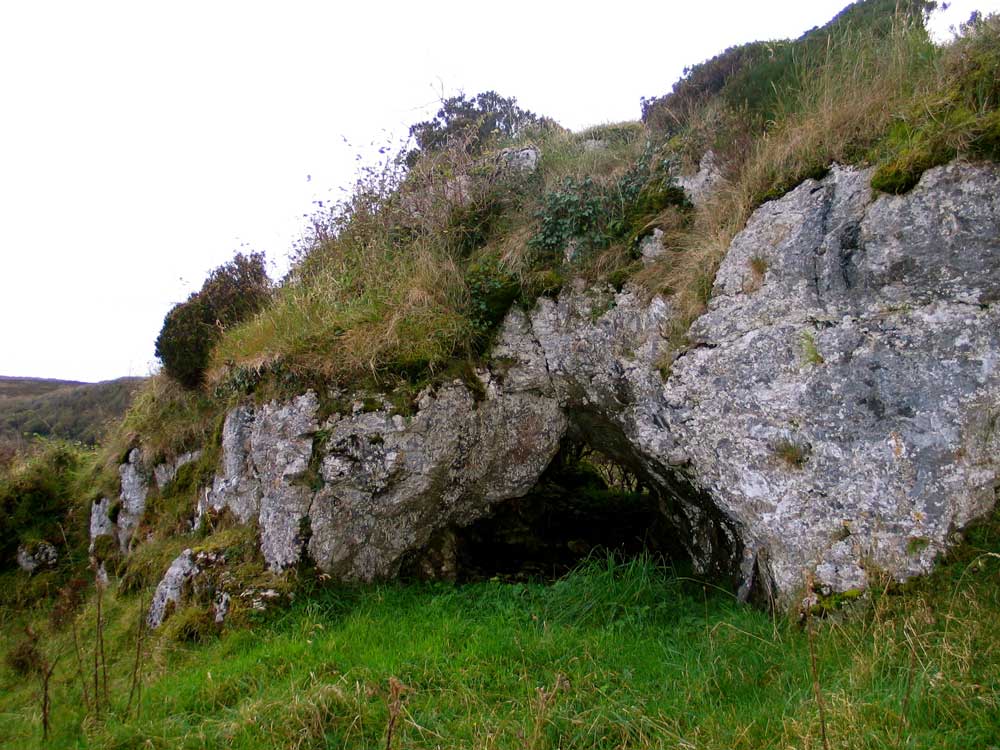
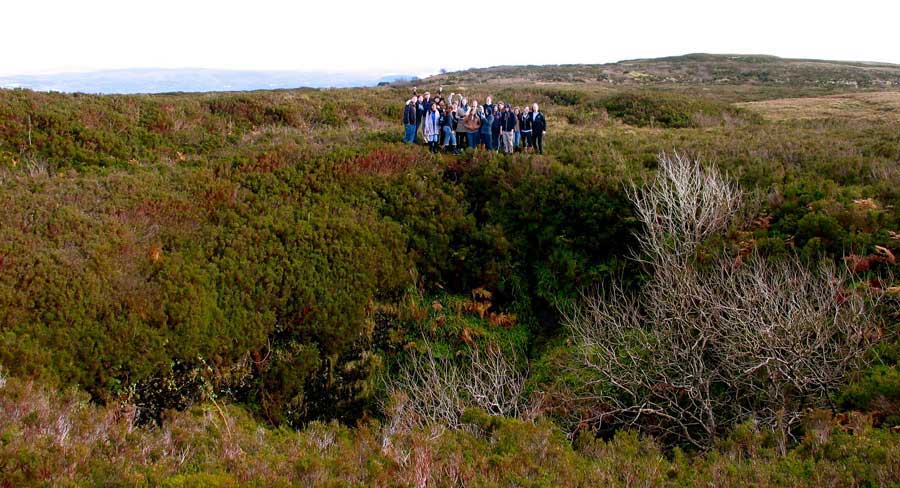
Another cave is found on the ridge below Cairn B, one kilometer to the north. The best known of Carrowkeel's caves is the huge swallow hole known as Poulnagollum, which means the Pigeon Hole. This massive hole in the top of the mountain formed when the roof of an underground cavern, formed under the glaciers, collapsed in upon itself.
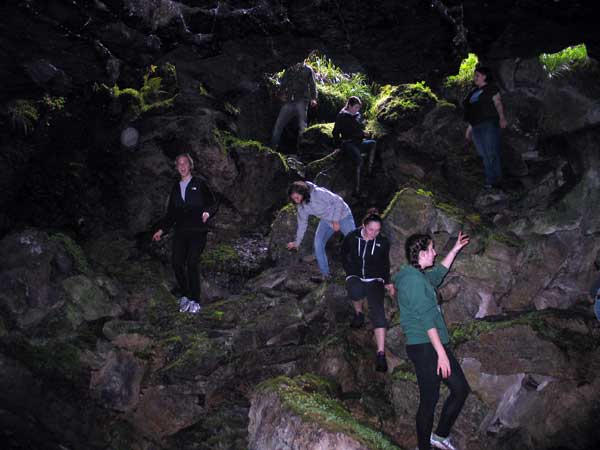
Poulnagollum is part of the Carrowkeel complex, situated as it is between Cairns K and L and Cairns M and M on the top of Carrowkeel ridge. Macalister thought it may have been the quarry where building materials were sourced, but lifting the slabs out of the hole would have been massive work.
There are a total of nineteen caves at nearby Kesh Corran.