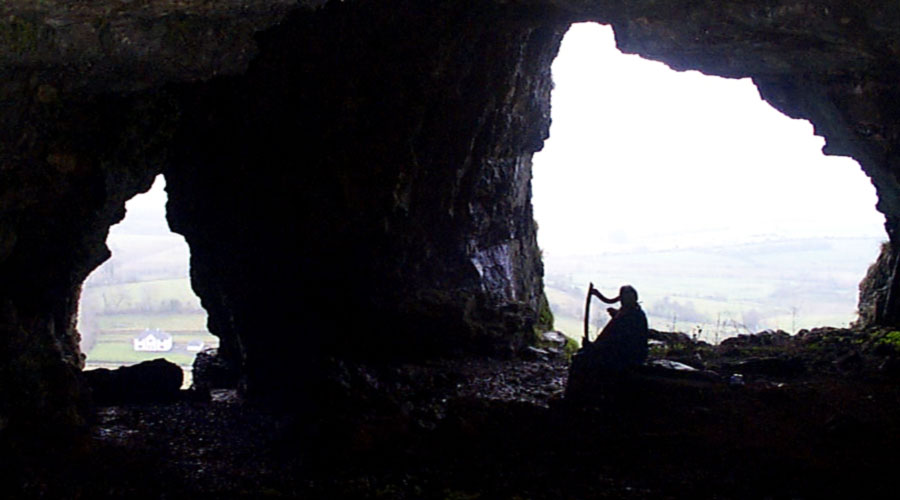
Mythology and Folklore
And Corann was the best of the harpers of the household; he was harper to the Dagda's son, Daincecht. And one time he called with his harp to Cailcheis, one of the swine of Debrann.
And it ran northwards with all the strength of its legs, and the champions of Connaught were running after it with all their strength of running, and their hounds with them, till they got as far as Ceis Corann, and they gave it up there, all except Niall that went on the track of the swine till he found it in the oak wood of Tarba, and then it made away over the plain of Ai, and through a lake.
And Niall and his hound were drowned in following it through the lake. And the Dagda gave Corann a great tract of land for doing his harping so well.
Gods and Fighting Men, Lady Gregory, 1904.
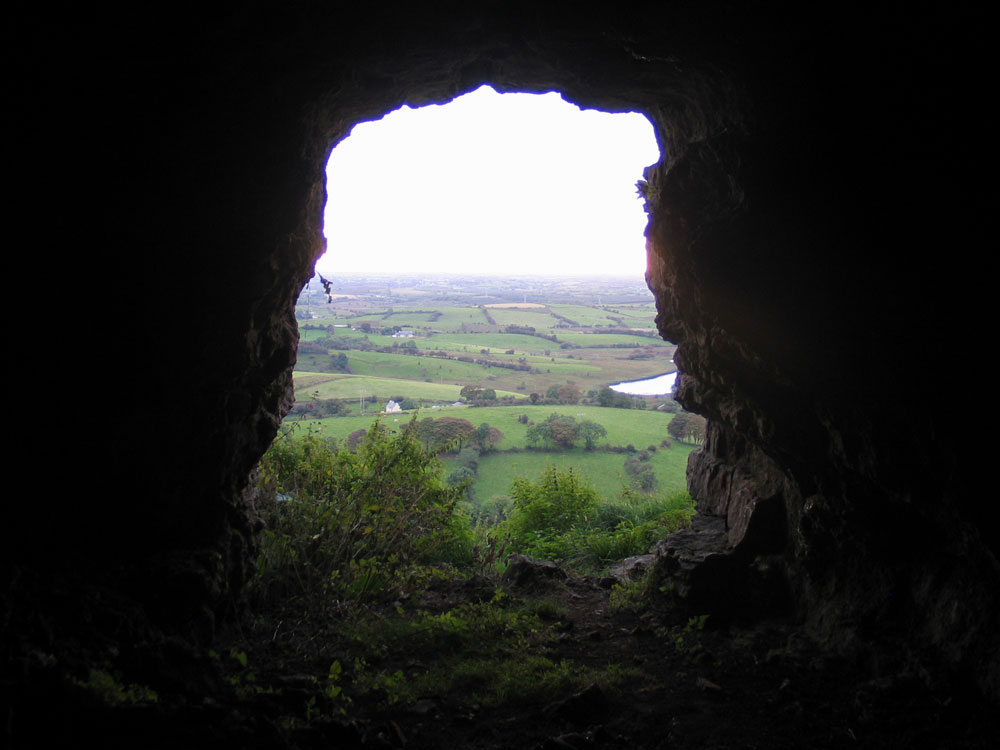
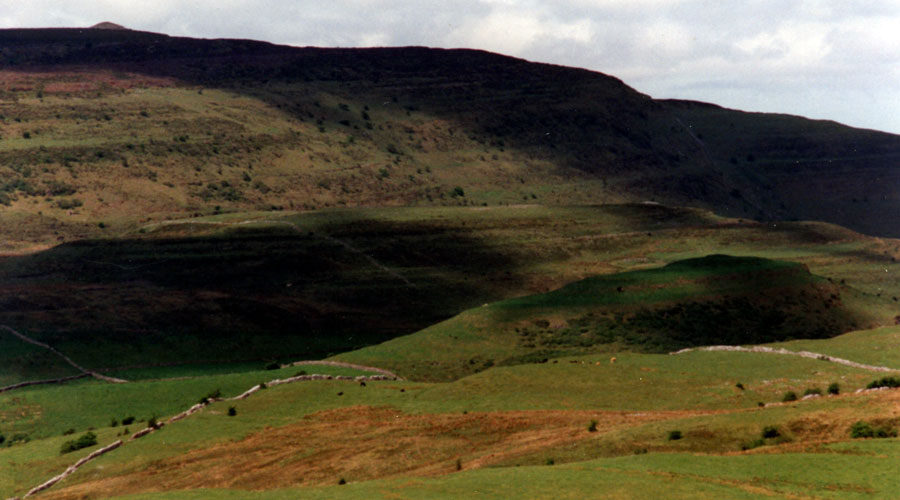
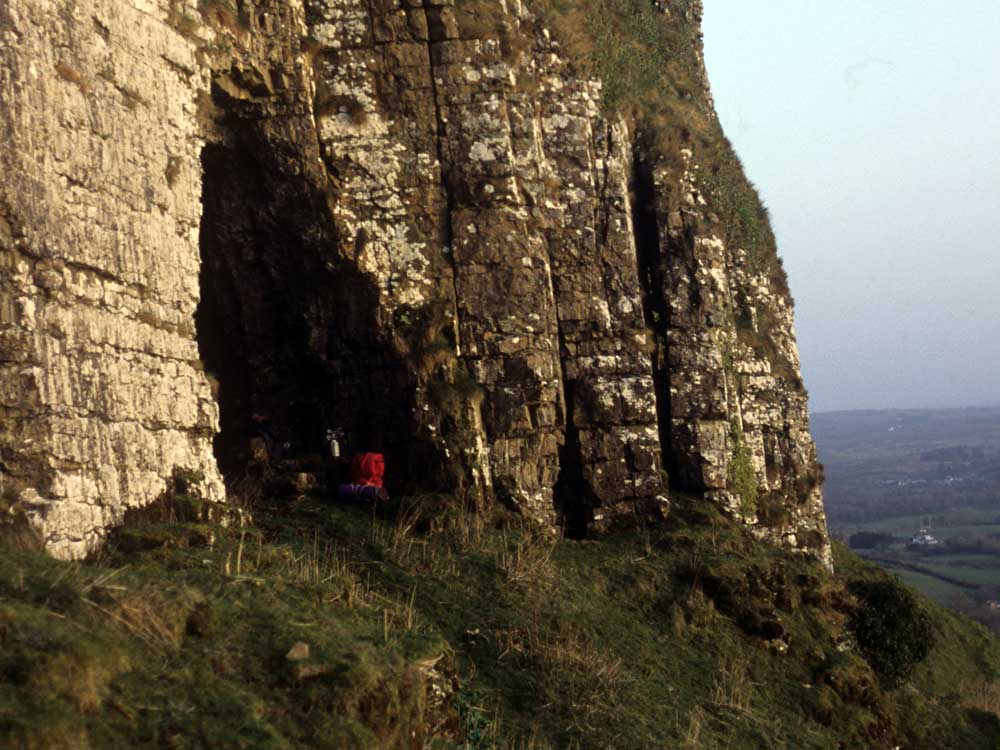
There are many myths and legends about the mystical fairy mountain of Kesh Corann. The earliest myth tells how Corann accompanied a hunting party, who had set out from Brú na Boínne in pursuit of an enchanted sow, Cailcheir, who was running amuck through the countryside and causing great havoc and destruction. The sow killed many of the warriors along the way, until she was finally subdued by the enchanted music of Corann. The warriors were finally able to kill the beast and its great body became the Hill of Kesh Corann.
Here abode the gentle Corann,
his harp-music golden toned
Corann the fair-skinned was a poet
in the service of Surgeon Diancecht.The Tuatha De (excellent name)
bestowed land without rent for his fine service
on Corann of the soothing strains.
For his learning he deserve high esteem.Here abode this noble, generous person,
plying no savage business nor sinister art;
it was a mansion of hospitality and plenty
when this noble man lived here.When Caelcheis was driven loose,
the savage pet-pig of Derbriu,
fleeing swiftly from the hounds of Connacht,
her way brought her to Corann.Each man took the hand of the man next to him,
hemming in the swine with blood-lust
and the strong sow was slain -
triumphant was the outcome of that battle.Ceis Corann, the gathering place of the hosts,
was thenceforth the name of this place of mighty herds
since the swine was killed there without mercy
in the lands where Corann lived.
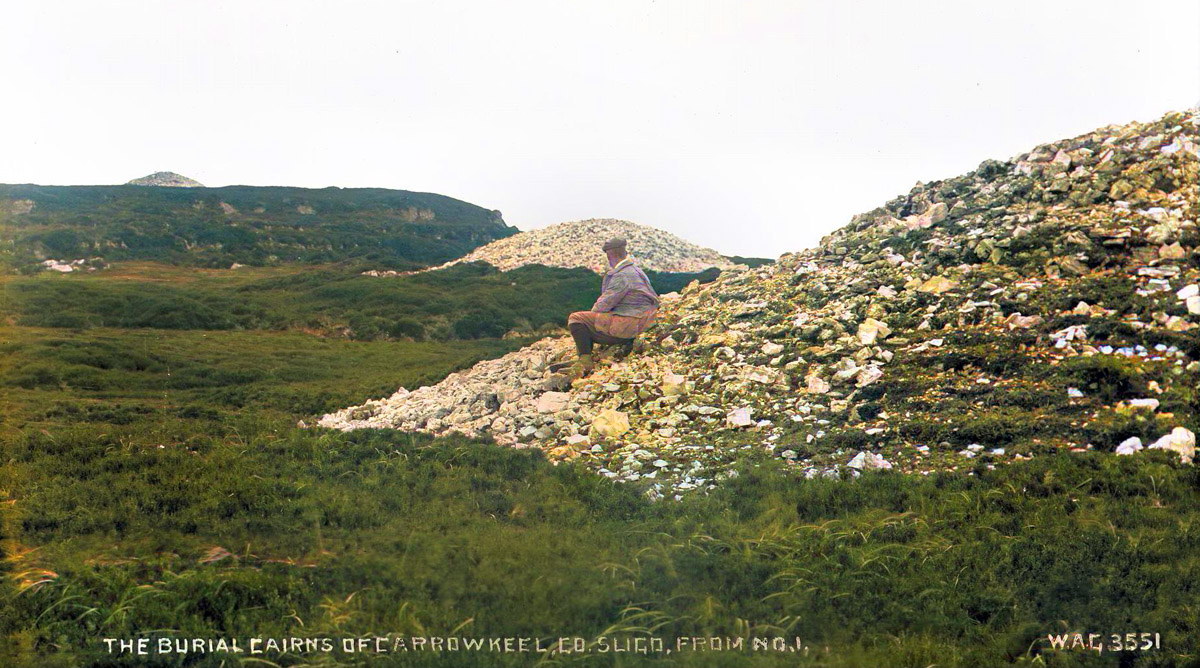
Since then, the mountain has always been associated with enchantments, the gathering of great hosts, and as a stronghold of the Túatha Dé Danann, the Tribes of the Goddess Danu, or, if you prefer, the Fairies.
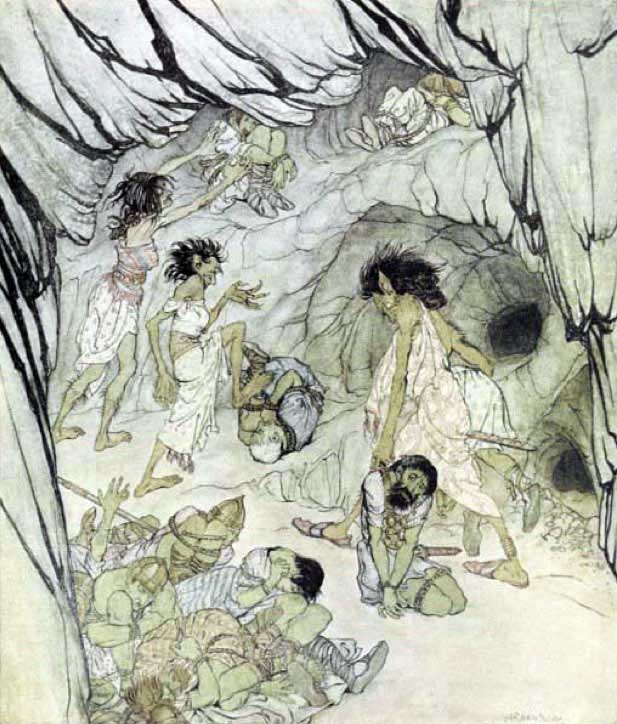
Click here to read James Stephens version of the Enchanted Cave of Kesh Corran.
When the Celts or Milesians arrived in Ireland, they defeated the Túatha Dé Danann at the Battle of Tailltu. The Túatha Dé Danann withdrew and retreated into their Cairns and Hollow Hills, only to appear in the world of men by moonlight night or on special feast days such as Samhain, when all the doors between this world and the Otherworld are open.
Mananann Mac Lir, the Lord of the Sea, is said to reside in the hidden lake of Kesh Corann; many of the lakes in the area, such as Arabhach, Cé and Leibe are named after his daughters. A belief survives in the area that one day the hidden lake will burst out of the mountain and drown the surrounding countryside. In another tale, the Túatha Dé Danann have a great mill in the mountain; the mill wheel, spinning too fast, falls into the lake and causes the great flood to burst out of the mountain.