Cairn J
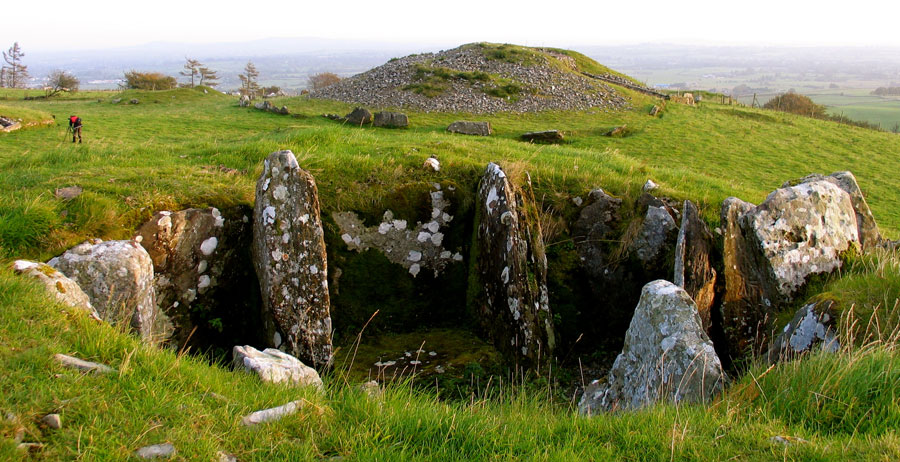
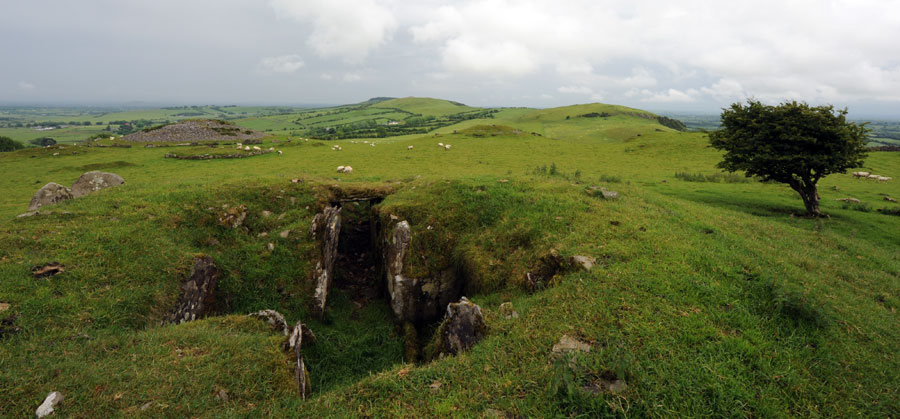
Located to the west of and immediately behind Cairn L and almost touching its kerb, the remains of Cairn J are about 14 meters in diameter. Conwell noted three decorated stones within the much disturbed chamber. The monument appears to be oriented south of east and across Cairn L, which indicates that it pre-dates Cairn L. A 'roughly-finished brown stone ball, about an inch in diameter' was the only find from Conwell's excavations.
This carn is twenty-three yards north-east of H, and only three yards distant from L. It is fifteen and a half yards in diameter, and its present remains from four to five feet in height, with twelve large stones still in the circumference.
The interior had been much disturbed, but left filled up with loose stones and rubbish. The passage, having a bearing of E. 10° S., is seven feet six inches in length, without any upright stone closing its entrance. A roughly-finished brown stone ball, about an inch in diameter, was found near the opening of the passage Into the interior chambers.
Three of the stones in this carn are inscribed.
Cairn K
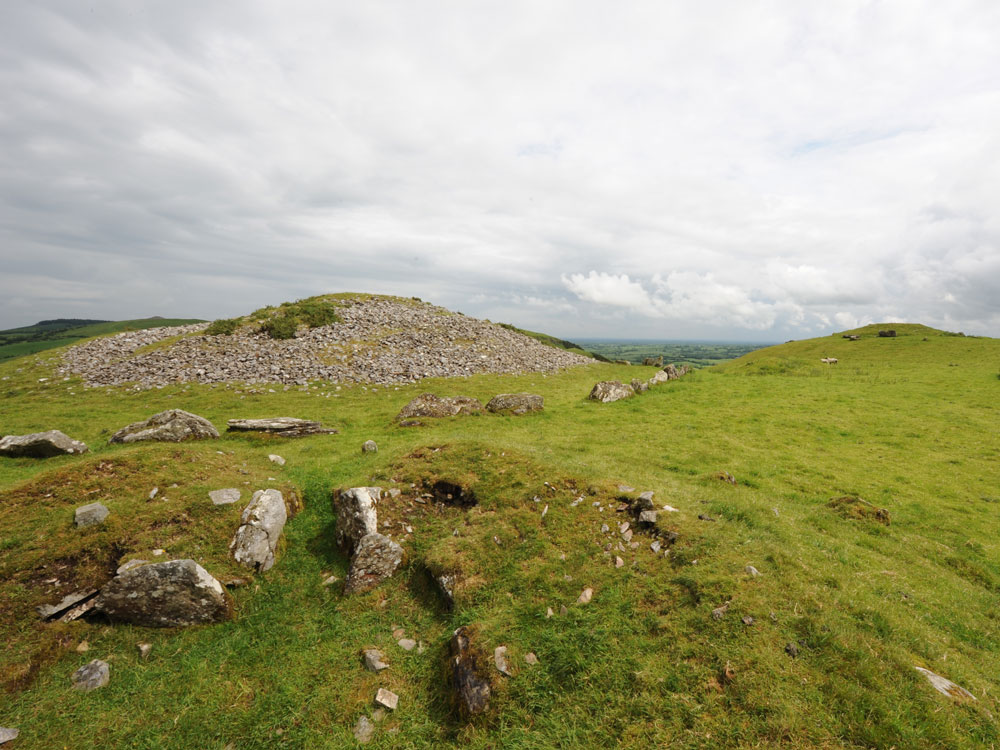
A smallish mound (Herity says 15 meters in diameter), Cairn K is dramatically situated on a small outcrop of rock immediately to the north of Cairn L. This monument is seperated from the others on Cairnbane West by a fence, and has been much trampled by animals.
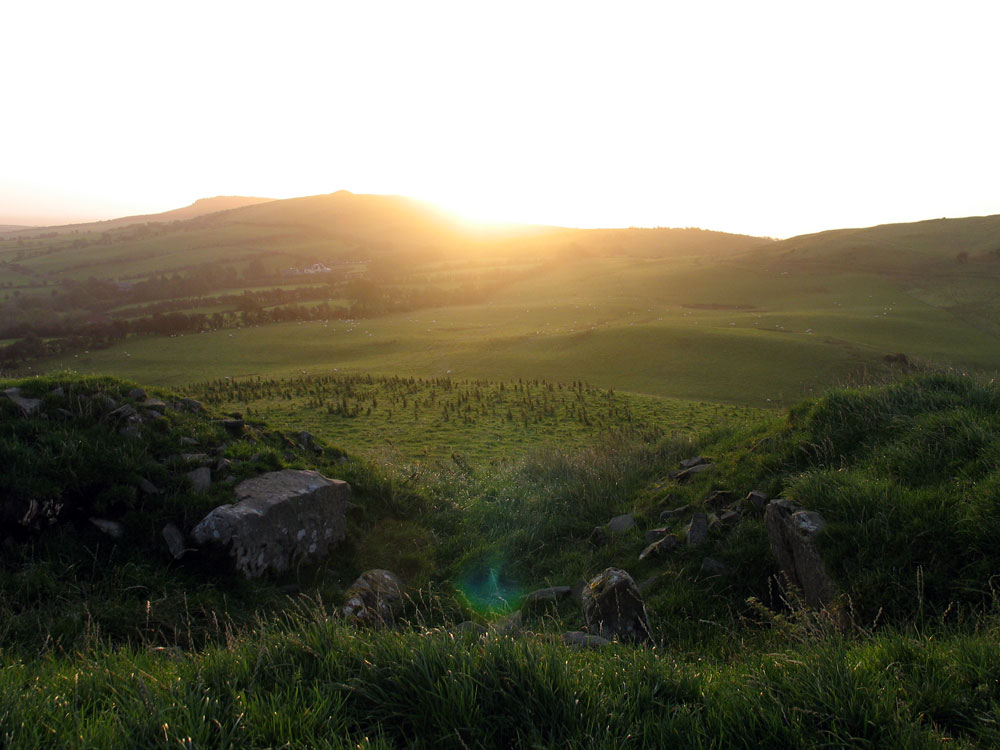
A kerb of long slabs survives; one or two have fallen down the slope from the entrance. The chamber is pretty ruined. Conwell reported two engraved slabs within. The orientation is reported to be roughly 110°, the direction of the Boyne Valley, though it looks to me as though it may be oriented to the east, and the equinox sunrise.
Carn K is twelve and a half yards northeast from L, and is sixteen and a half yards in diameter. When the interior was cleared out, the large flagstones forming the central chambers were found in a rather disorderly condition.
The bearing of the entrance is E.15°N. Thirteen stones remain round the margin, and no object of antiquarian interest was found here. At a distance of twenty feet to the south-east now lies a pillar stone, six feet long, two feet broad, and one foot thick.
Two of the chamber stones are inscribed.