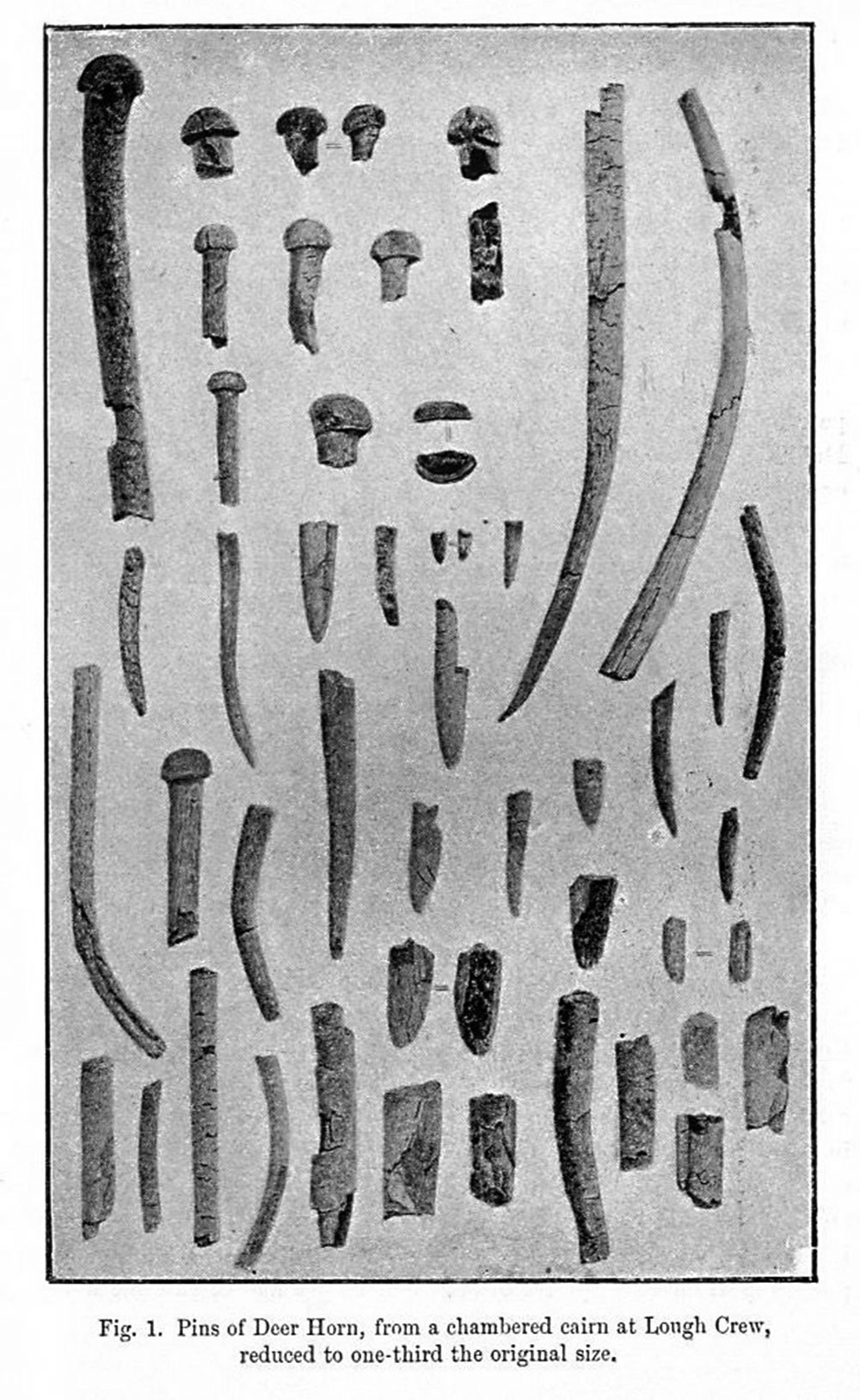
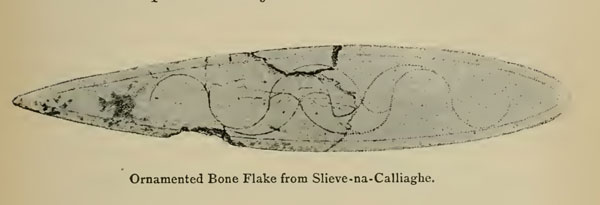
The accompanying illustration will show the appearance of the peculiar bone objects which I am desirous of submitting to the Society of Antiquaries of Scotland. When perfect, they must have been several inches long, terminating in sharp points, several examples of which are observable. The upper extremities consist of blunt, hemispherical heads, eleven of which were obtained, belonging to so many separate implements, not unlike button mushrooms in shape, being somewhat larger than the stalk-like stem proceeding from them, so that they resemble large nails, pins, or dowels.
It will be observed that all these semicircular heads are grooved or hollowed out underneath where they are joined to the irrespective stems, and on some of them obvious traces of charring from the effects of fire are distinctly to be noticed. All these details will be perceived by inspecting the accompanying selected specimens presented to me by Mr Rotheram.
Some years since, my friend Colonel Wood Martin of Sligo submitted to me for examination and report portions belonging to three similar implements of bone. Of one the broken, pieces were sufficient almost to reconstruct the complete size and shape of the original; the second consisted of detached pieces, forming altogether about half the length of the weapon or pin; and the third was represented by a small portion of its lower pointed extremity.
They are now preserved in the collections of the Royal Irish Academy, and I have drawn the two larger and more perfect specimens for comparison with those found in the Lough Crew cairn. They were discovered by Colonel Wood Martin when exploring two of the cromlechs at Carrowmore, County Sligo, and are figured in his work on the Rude Stone Monuments of Sligo.
I submitted sections of these objects to microscopic examination, and ascertained they consisted of some description of osseous substance, which, at the time, I surmised might be of Cetacean origin: the fragments felt solid, of exceptional density, and were much eroded, from the action of fire and long continued deposit under ground, resembling in external appearance certain objects made from the bones of whales, contained in the Dublin Science and Art Museum, brought back by one of the exploring expeditions to the Arctic regions.
At the time it did not occur to me they could possibly consist of red-deer horn: however, on receiving the numerous specimens obtained at Slieve na Calliagh by Mr Rotherham.
Pins of Deer Horn, from a cromlech at Carrowmore, Sligo, reduced to one fourth the original size.
which were in a more favourable condition for preparing sections, I was able to determine that all alike, whether from Sligo or the County Meath, should be referred to portions of the horns of the red-deer, an animal extinct in the present day in Ireland, except a few remaining in the woods of Killarney, though more than abundant three centuries ago in almost every part of the country.
I likewise examined, for comparison, some of the tips of red-deer tines obtained in the older parts of Dublin in considerable quantities when excavating sewers, the residue of trade refuse, when making knife-handles, and some fine heads of this animal got in our bogs, lakes, and river-beds, furnished with large branching horns, enabled me to ascertain there would have been no difficulty in procuring from them pieces of sufficient length and of suitable hardness to fabricate similar bone pins to those now shown in the drawings and specimens.
The red-deer in Ireland acquired a larger and more vigorous development in former times, and its antlers grew to greater size than subsequently, as the heads preserved in our museums prove.
I have not thought it necessary to append measurements of these heads, several of which are mentioned in Sir William "Wilde's paper on "The Ancient Animals of Ireland."
Microscopic specimens obtained from the discoveries made in Sligo and County Meath will accompany this communication, for the satisfaction of those desirous of inspecting them.
The points of interest appear to me to be the occurrence, as yet undescribed, of pins made of bone, of exceptional size (or whatever else these implements hereafter may prove to be).
Of course, smaller-sized bone pins are very common, and we have bronze pins attached to fibulae fullyas large as the deer-horn pins now shown. Also the identity of such specimens as those discovered by Colonel Wood Martin in Sligo and by Mr Rotheram in Meath, localities widely separated in the East and West of Ireland, associated alike with fragments of broken urns, quantities of burned human bones, rude beads of stone and bone, and a few composed of coloured glass, with pieces of white quartz and rolled sea-pebbles, and some rare specimens of perforated rock-crystal, intended for wearing as rude ornaments,— in both instances obtained as the result of explorations inside cairns.
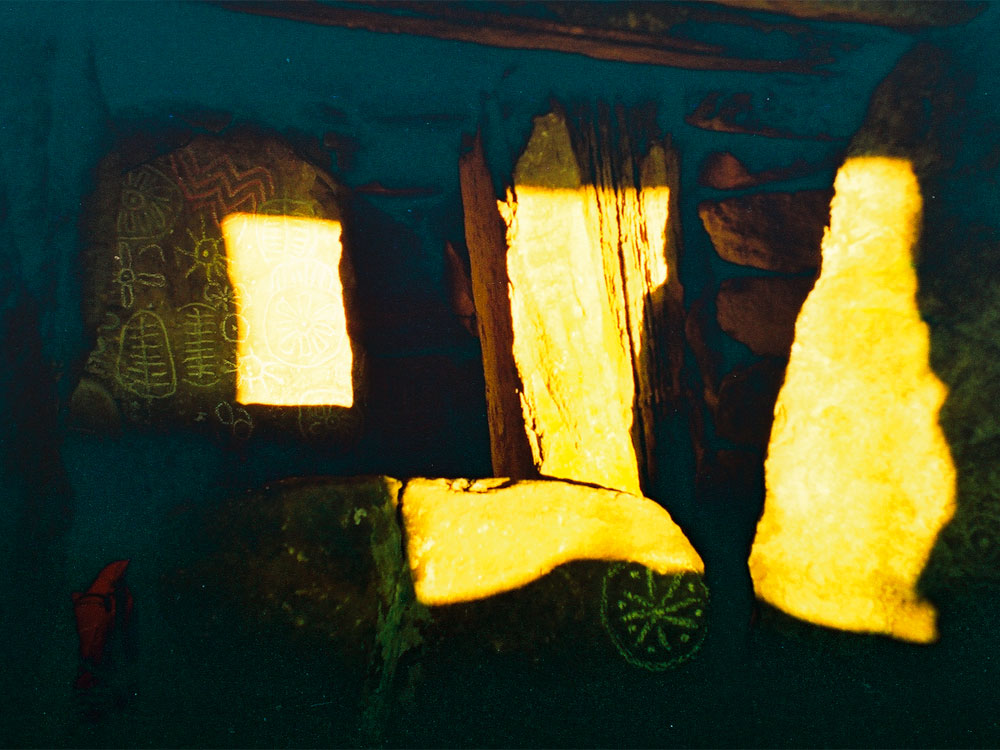
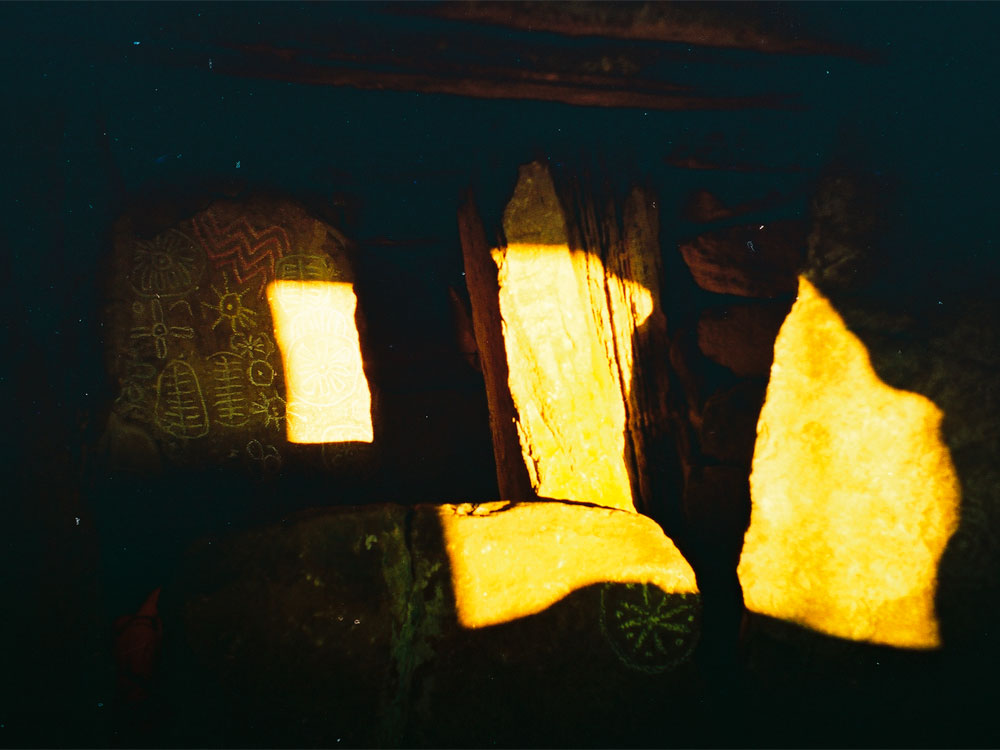
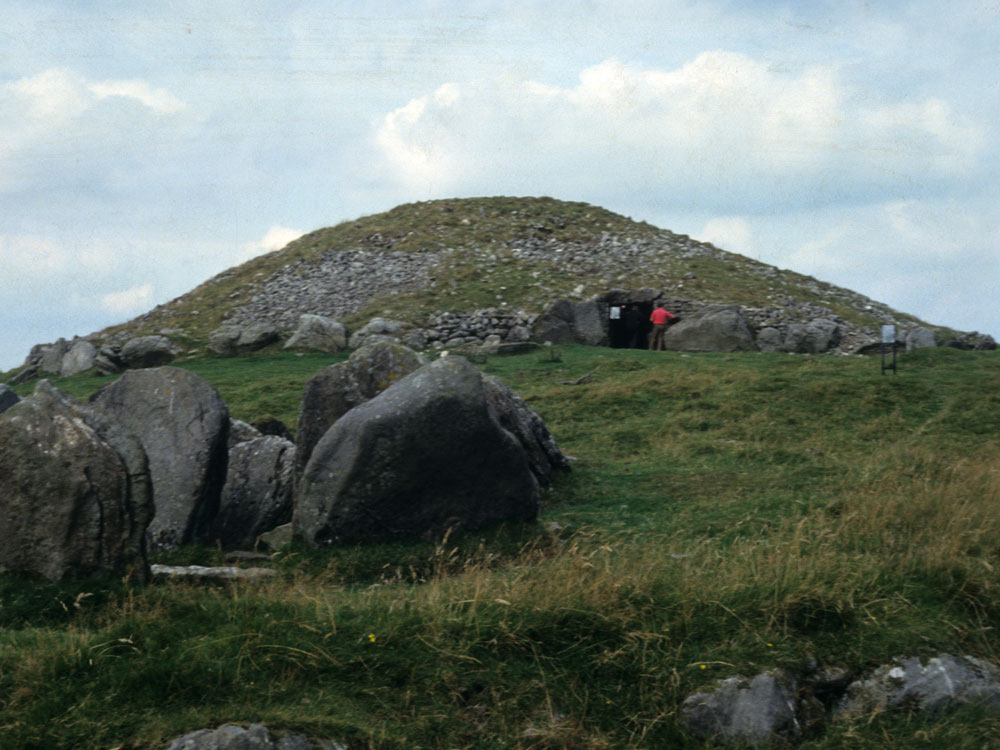
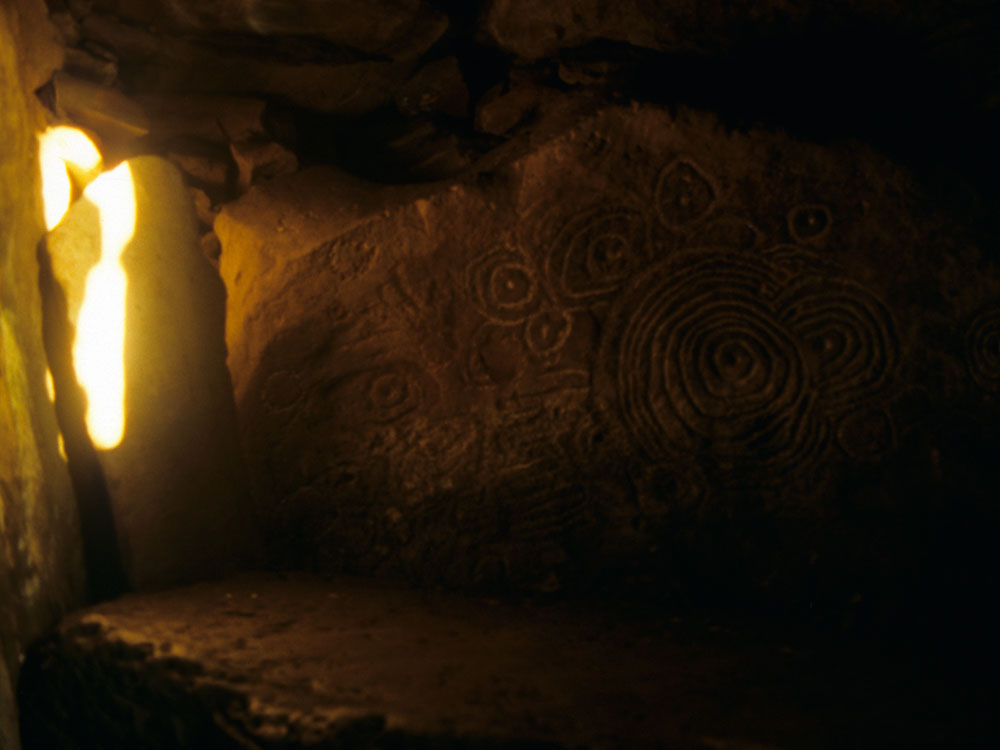
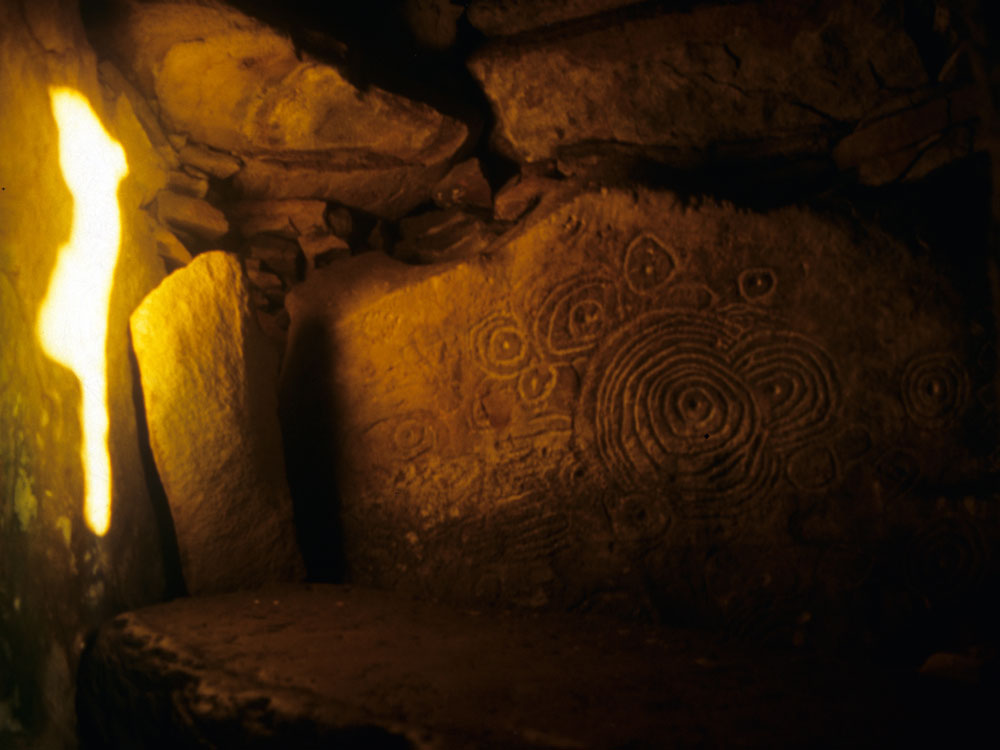
Today
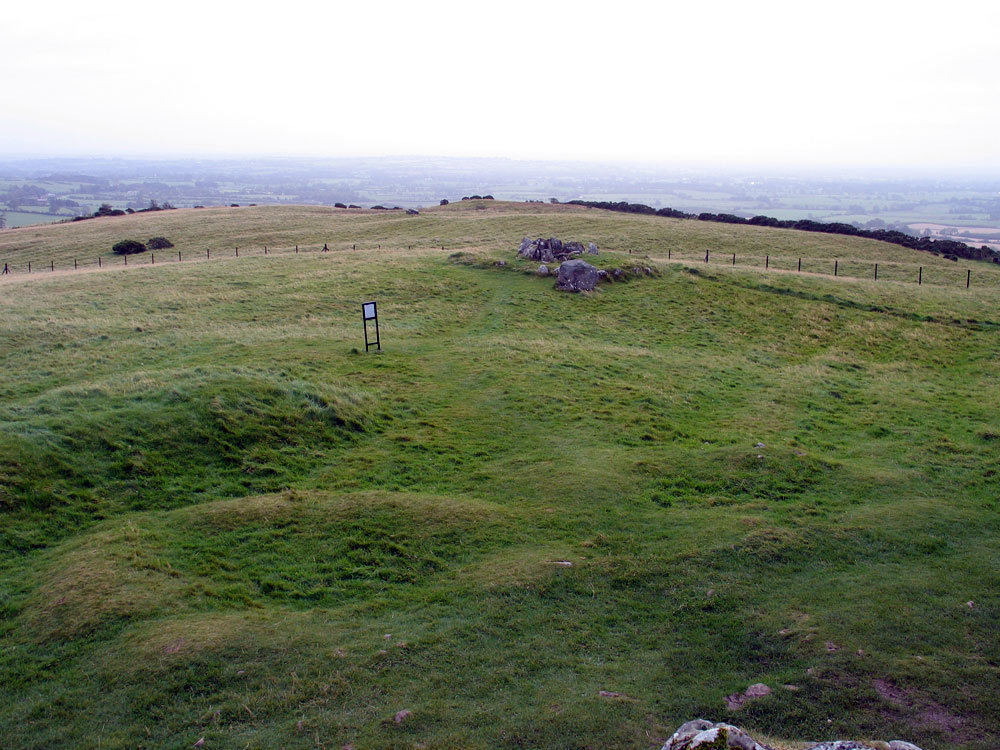
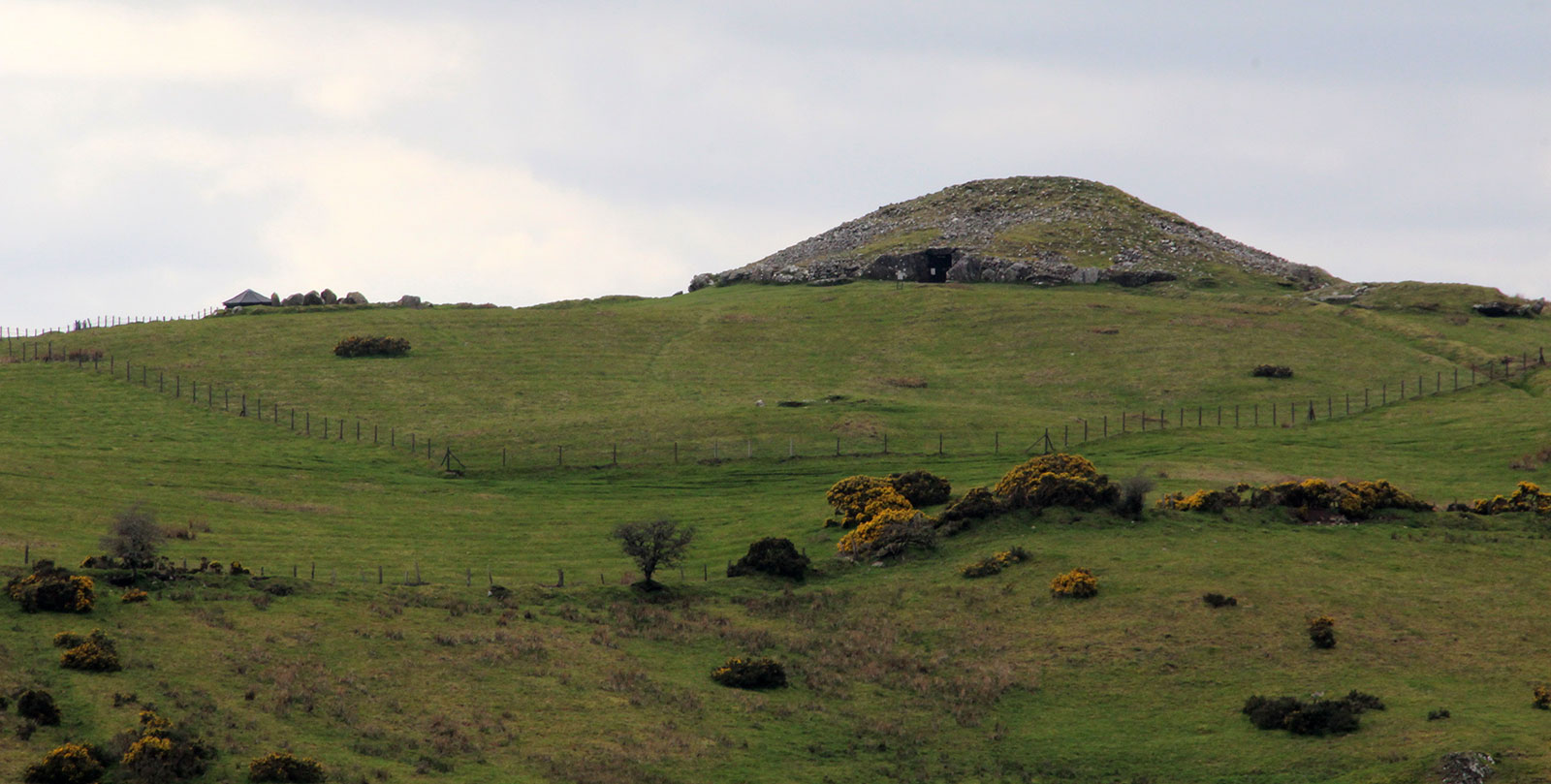
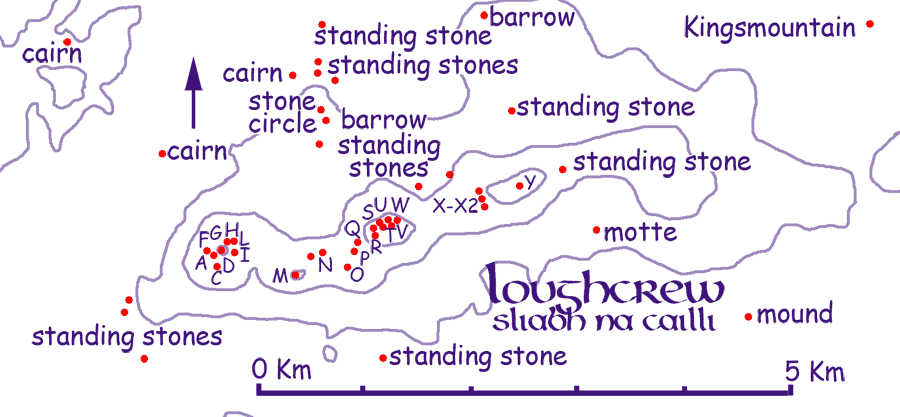
Carnbane East, the central part of the complex is owned by the Irish
Goverment, and during the summer Office of Public Works guide are available
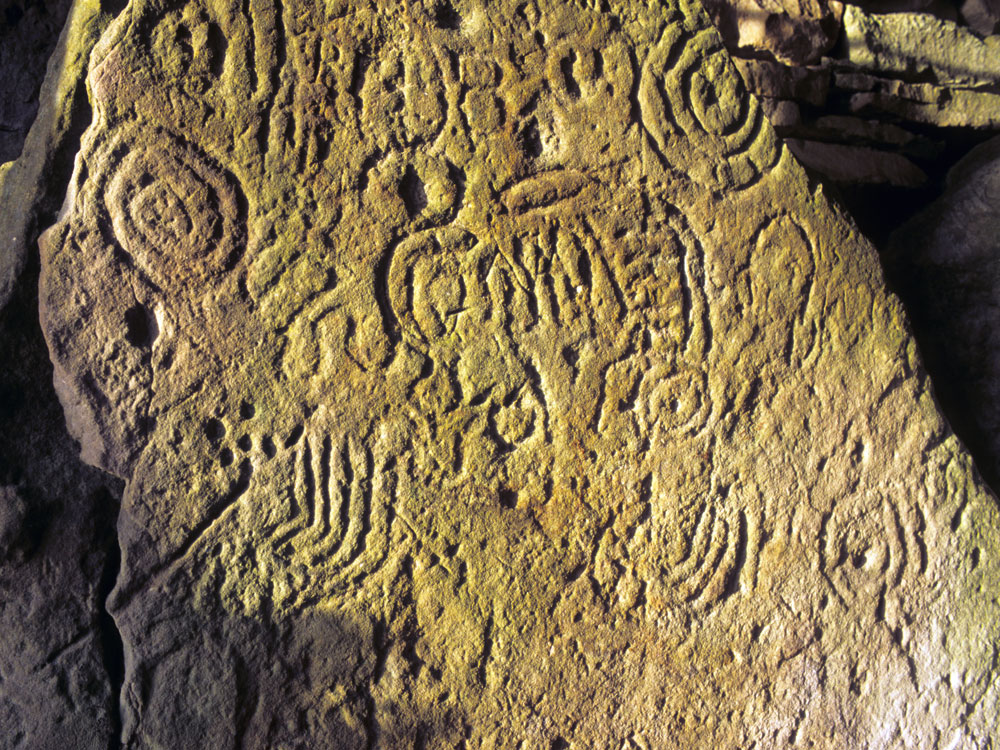
to give tours. This can quite important, as over the years it could be
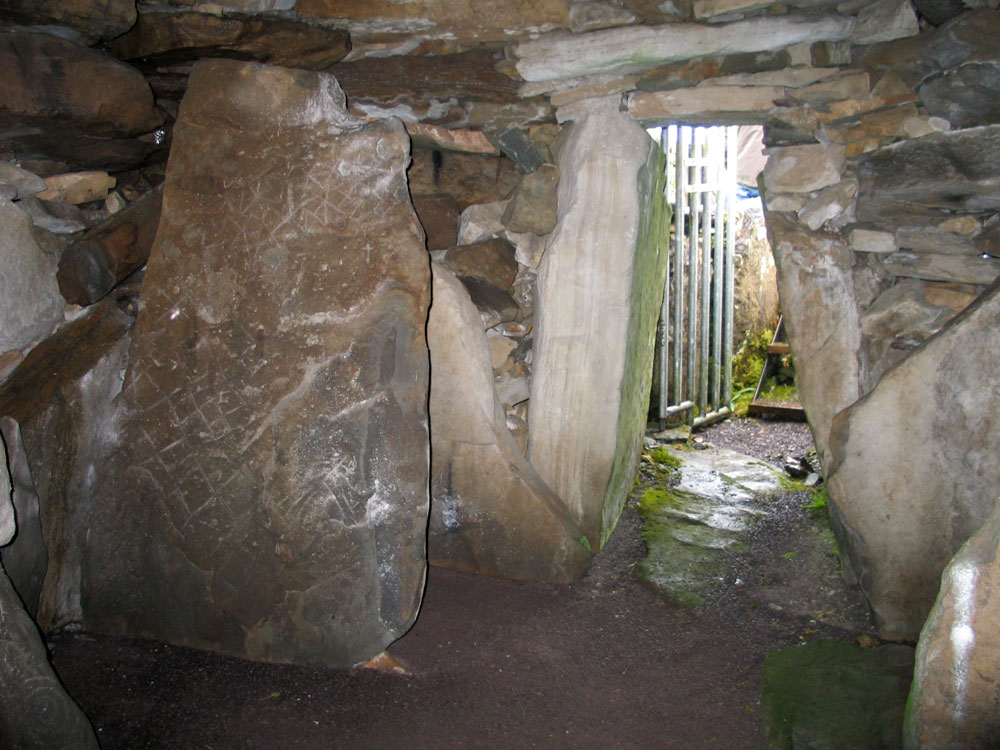
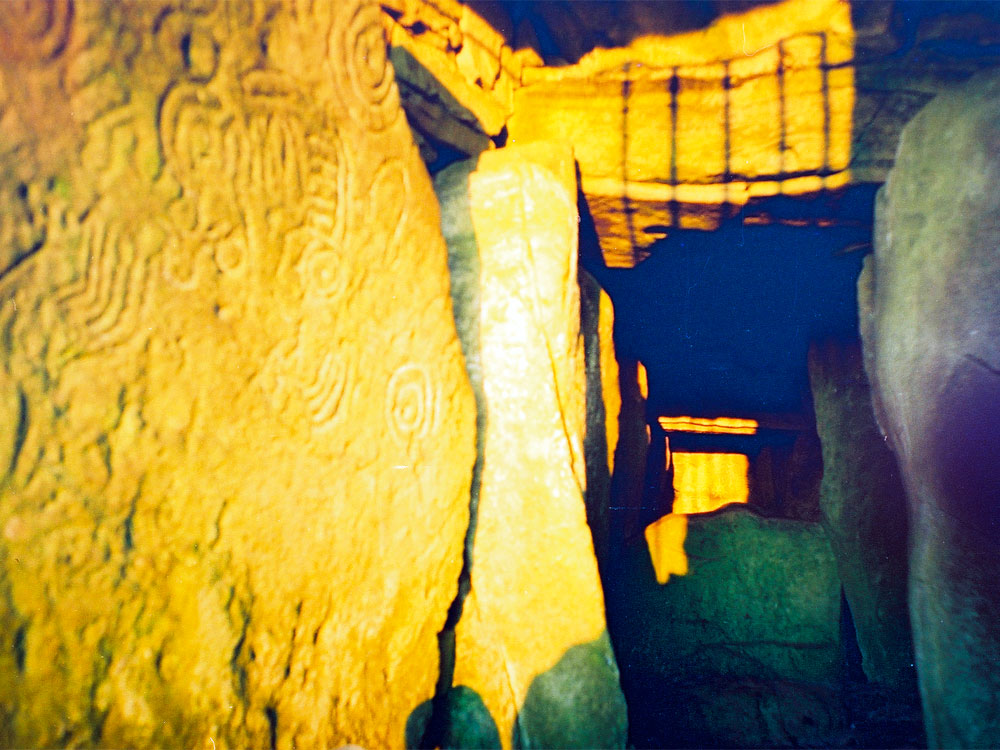
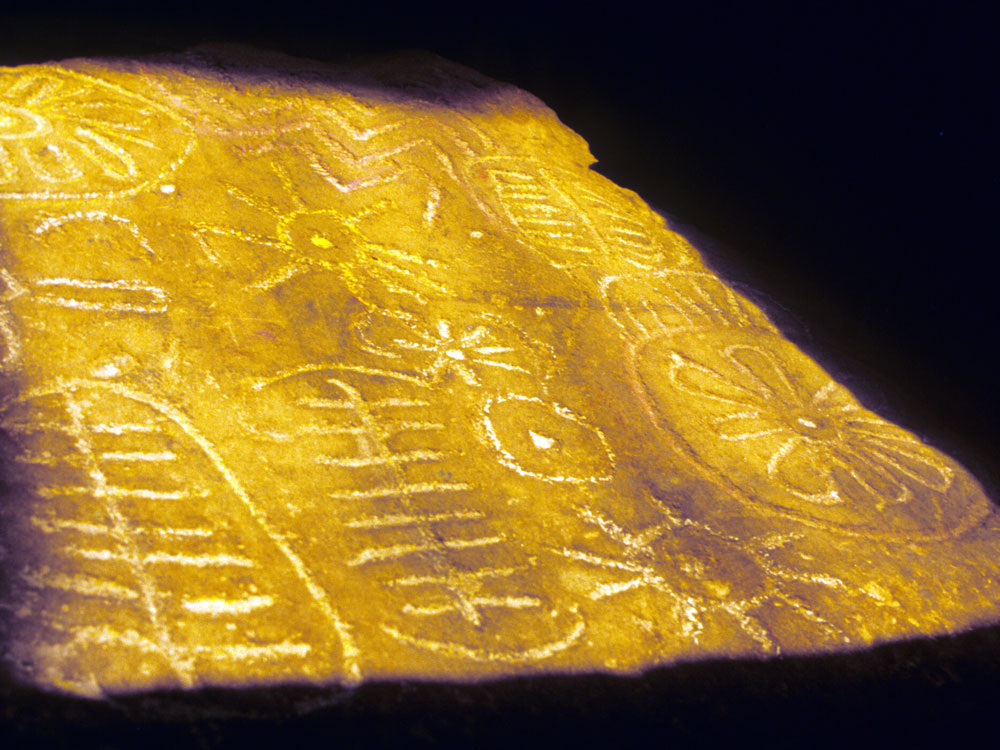
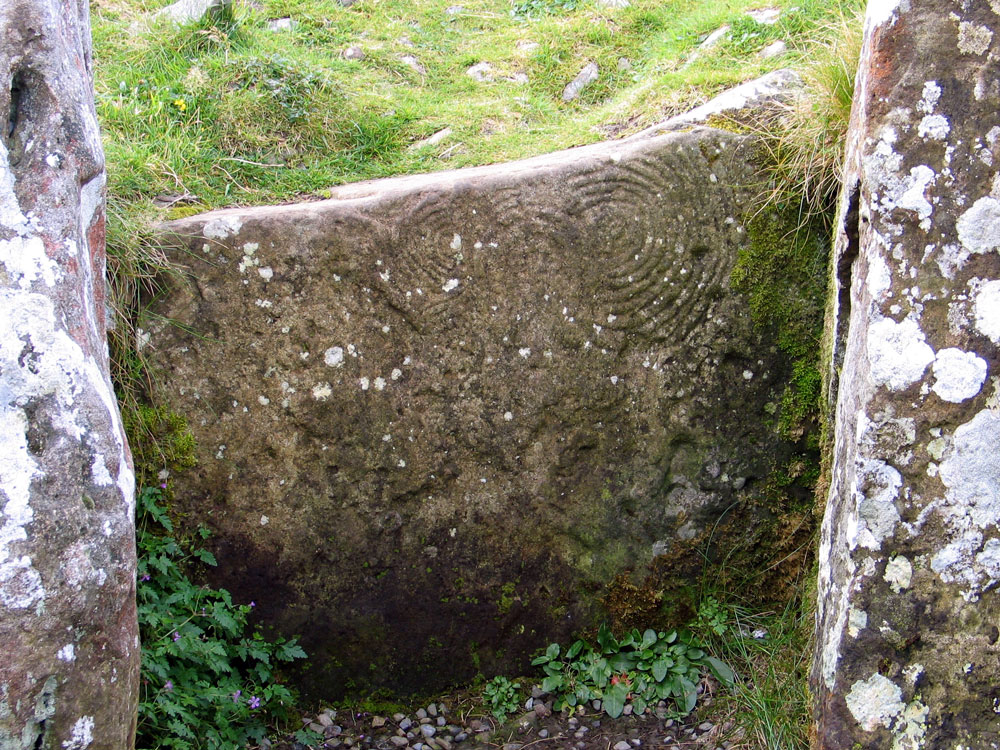
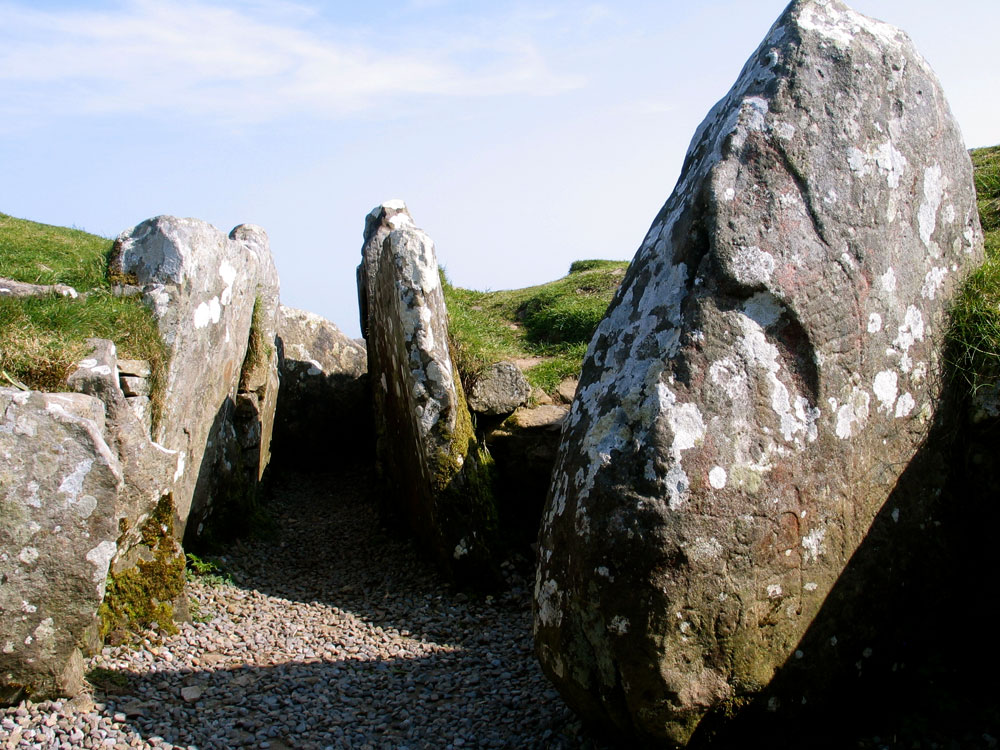
very difficult to find the person with the key to view the site art within Cairn T.
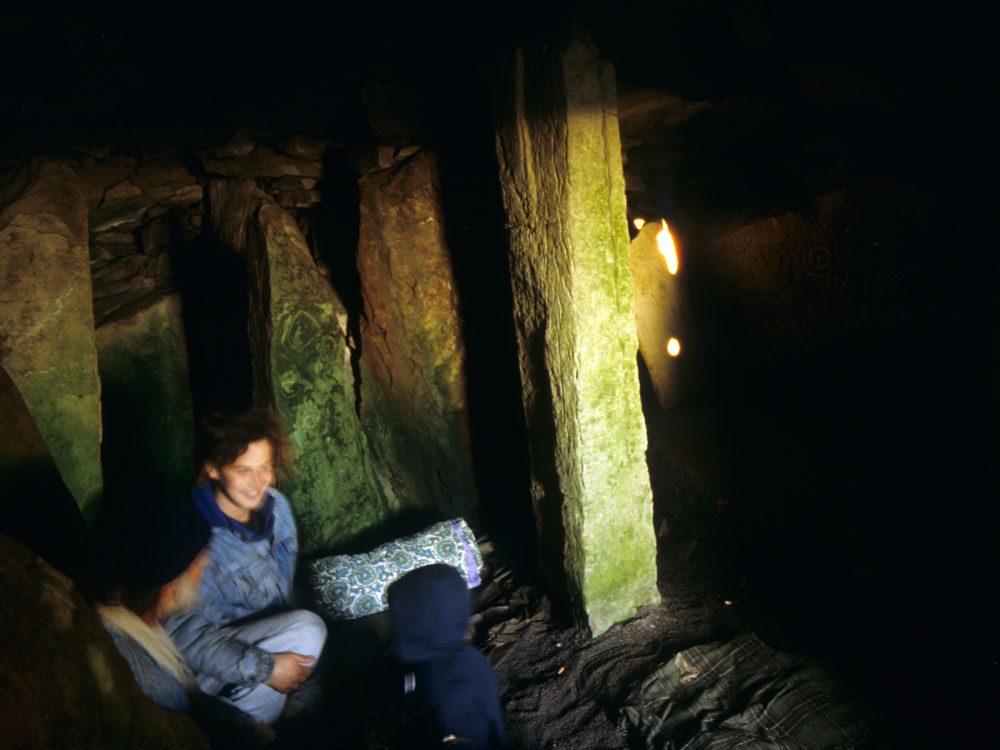
Also, as greater numbers
of people began to arrive to see the equinox alignment, it became nessecary
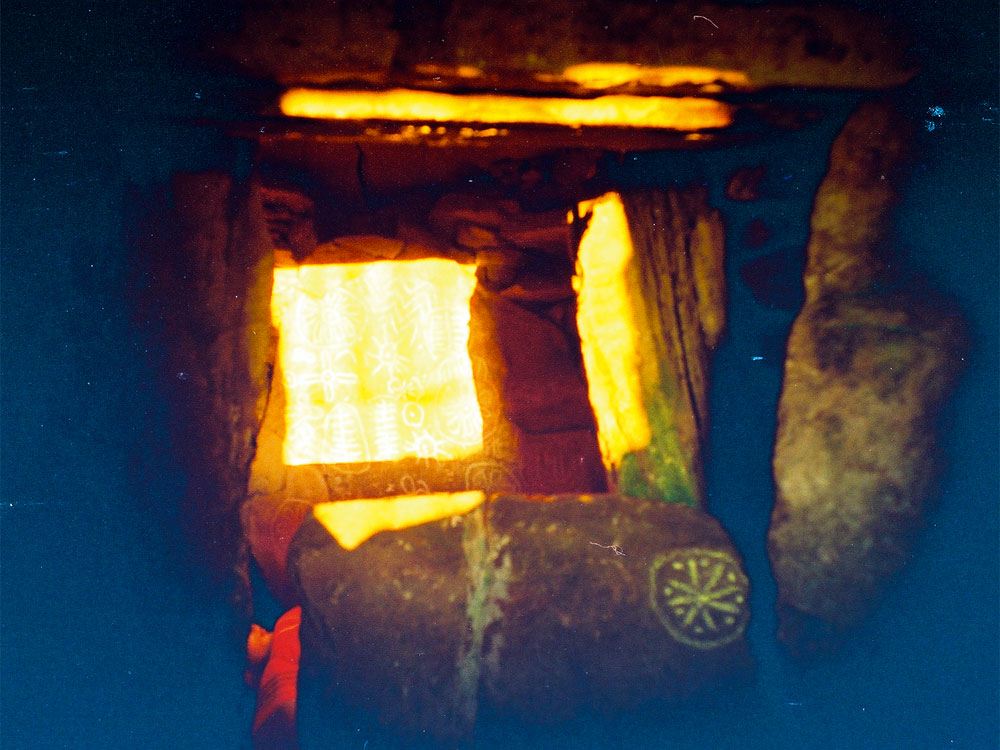
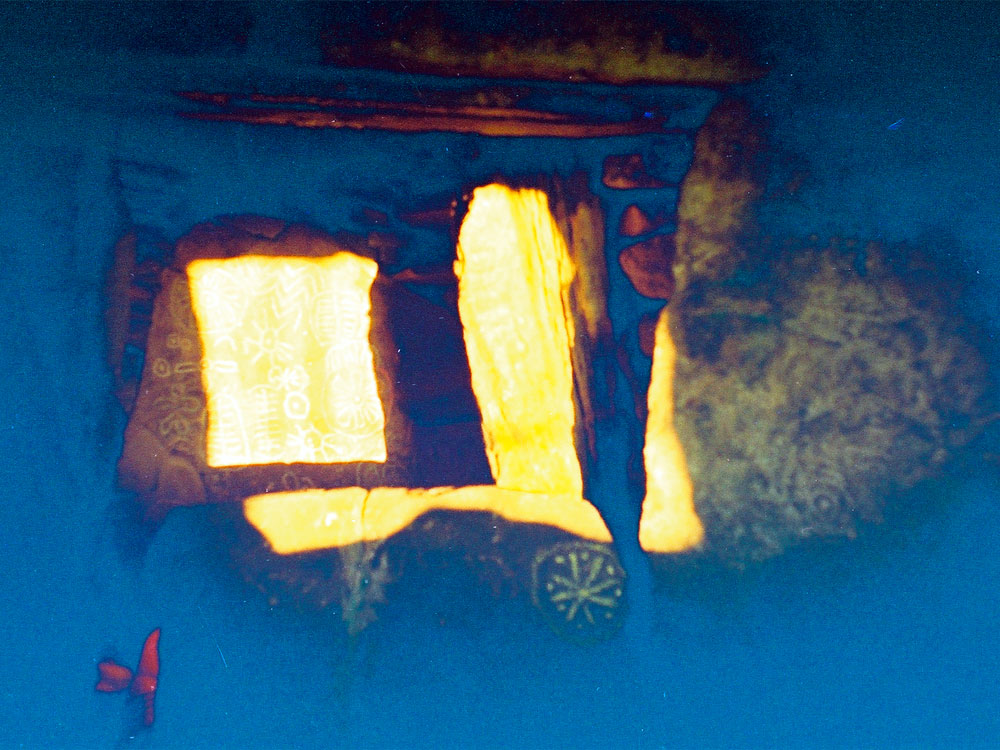
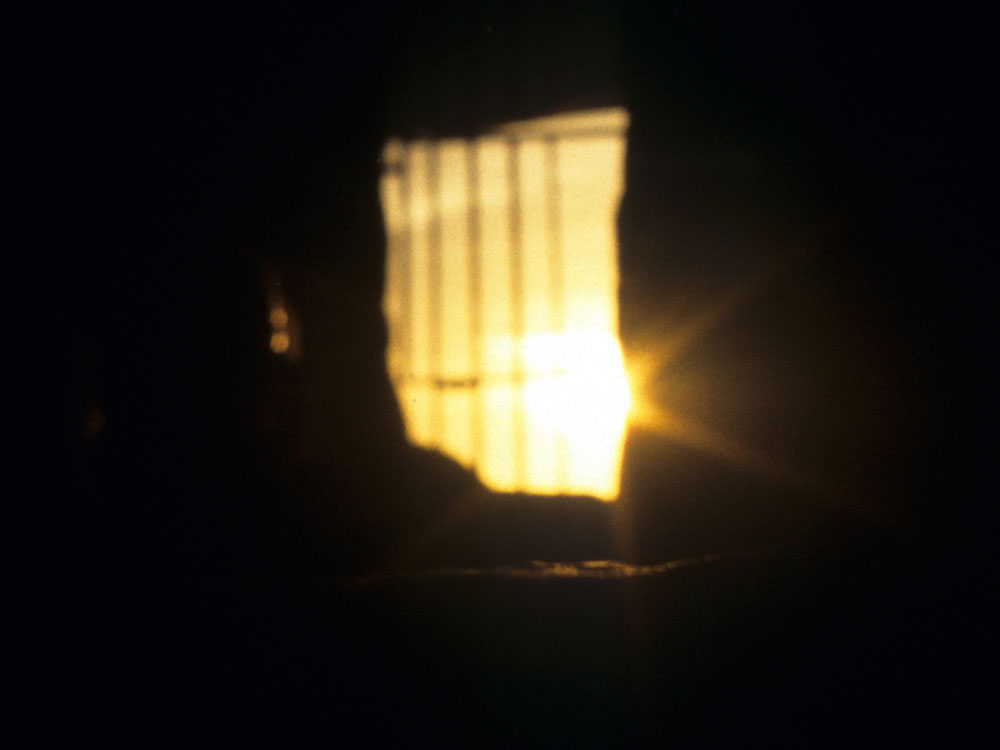
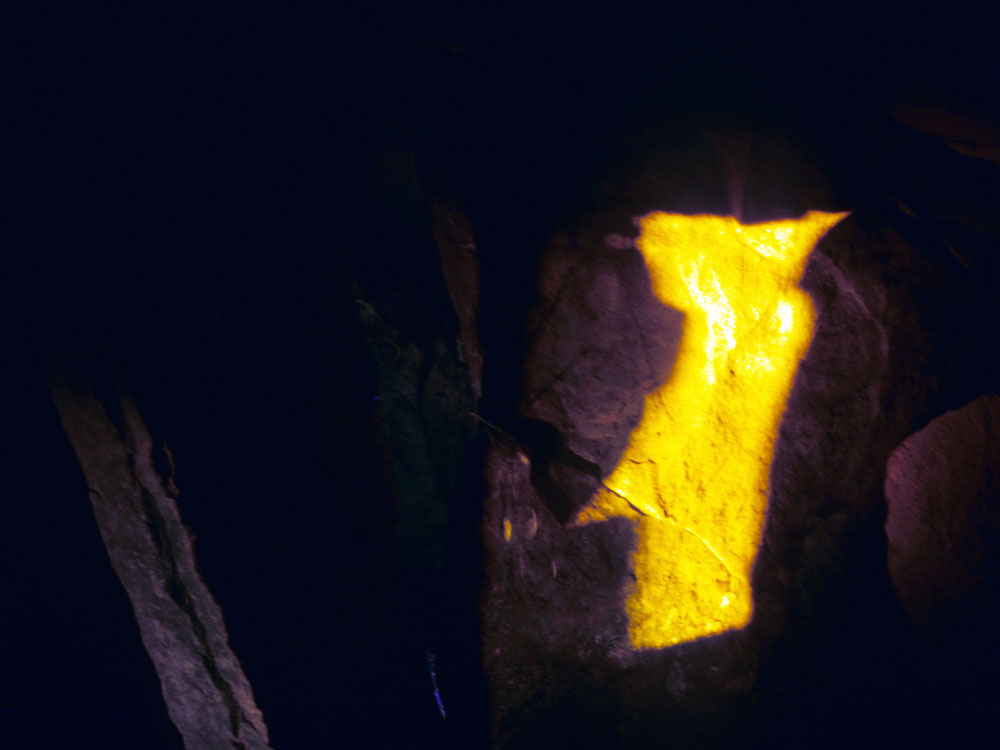
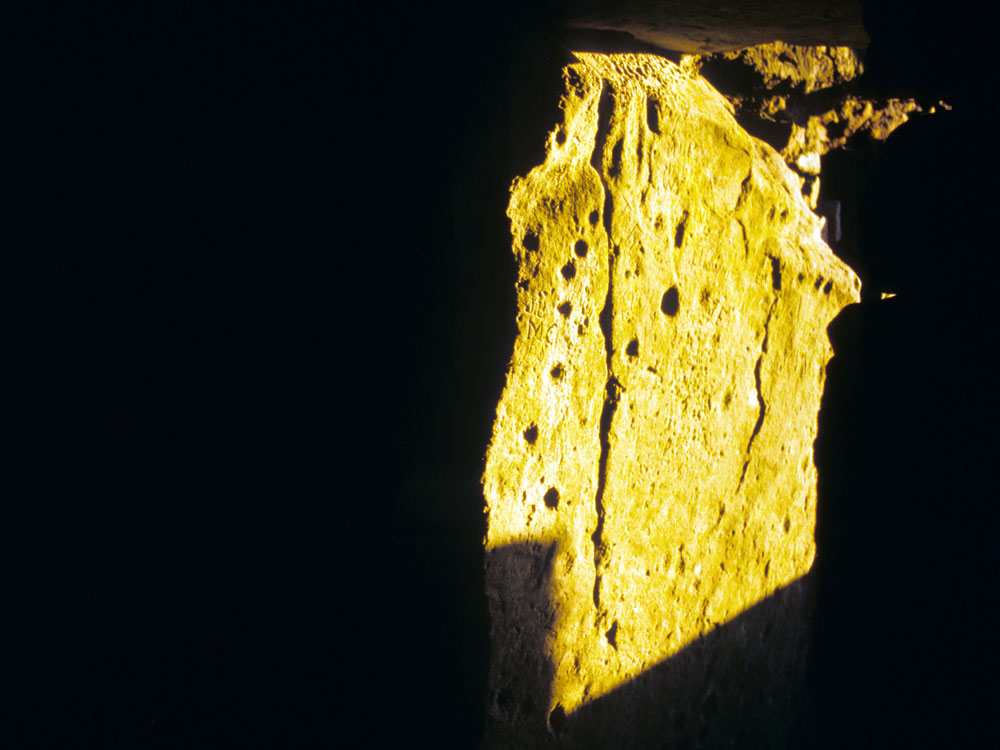
for a bit of marshelling to make sure everyone got in to see the lightbeam.
I remember one occasion when an individual with a film camera tried to
lock himself in the chamber much to the annoyance of the twenty or so
people he was trying to lock out.
Carnbane
West is privately owned, and for the last number of years, access has
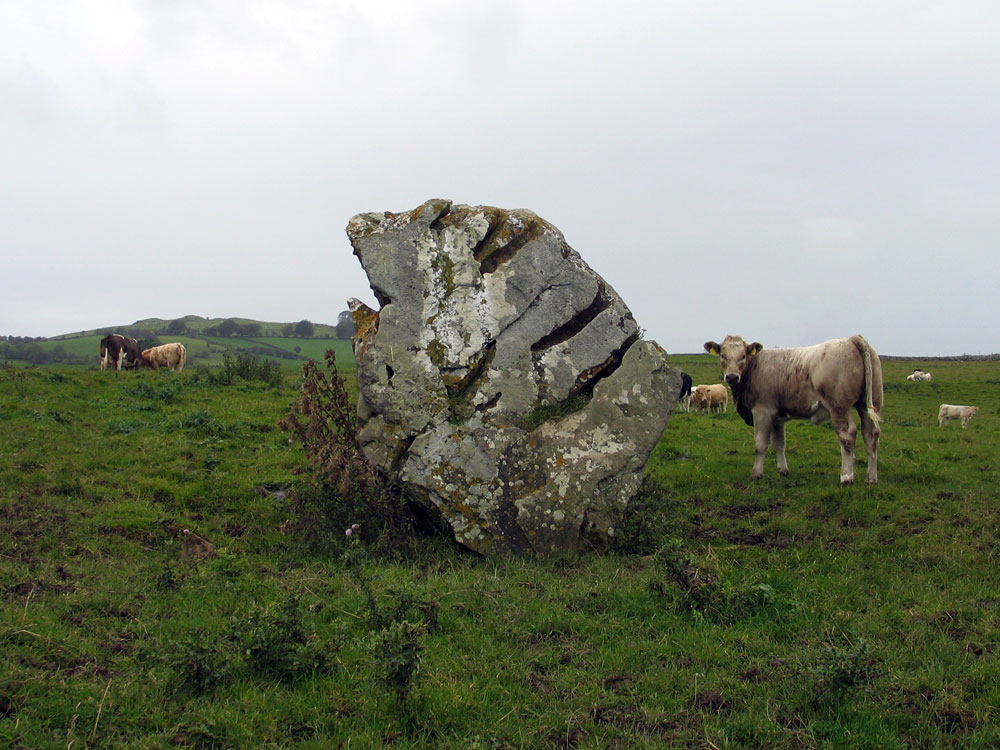
been denied to enter Cairn L to view the cross quarter day sunrises. Patrickstown
hill is also privately owned, but since the sites are quite destroyed,
only the very commited make the treck over to visit the beautiful calendar
stone.