Cairn D
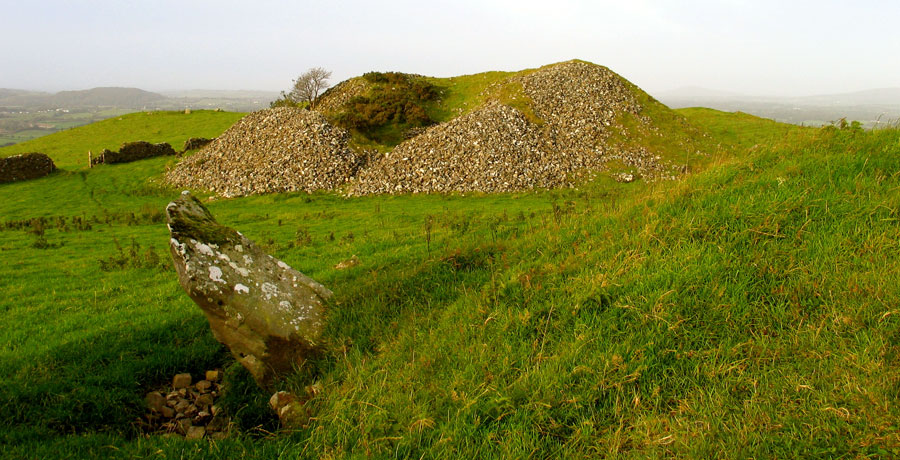
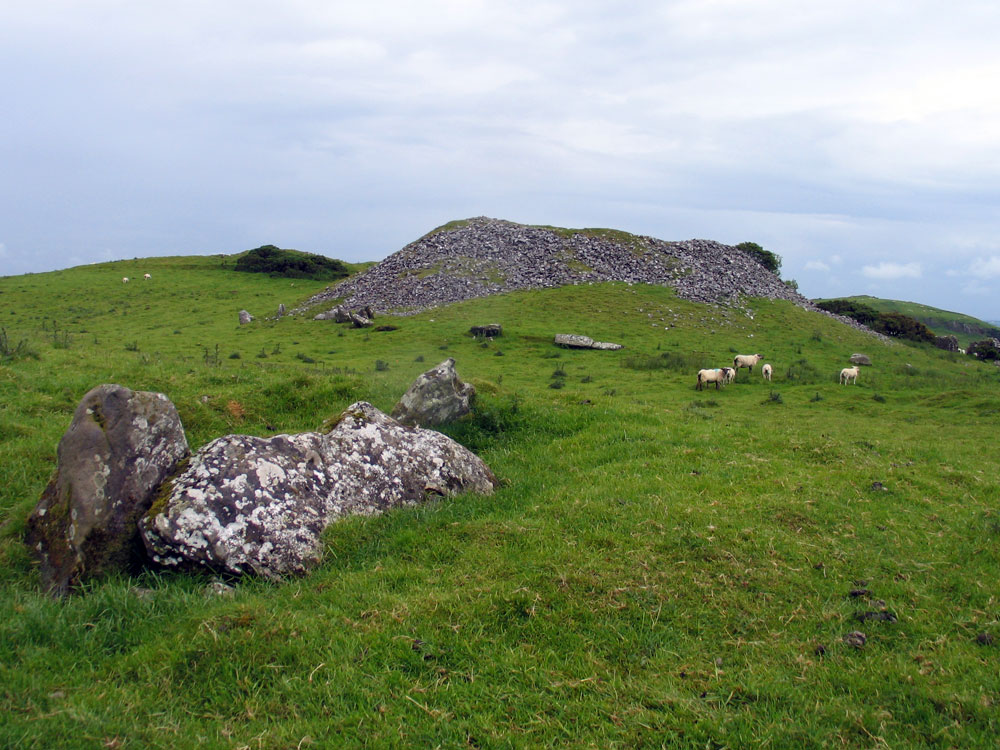
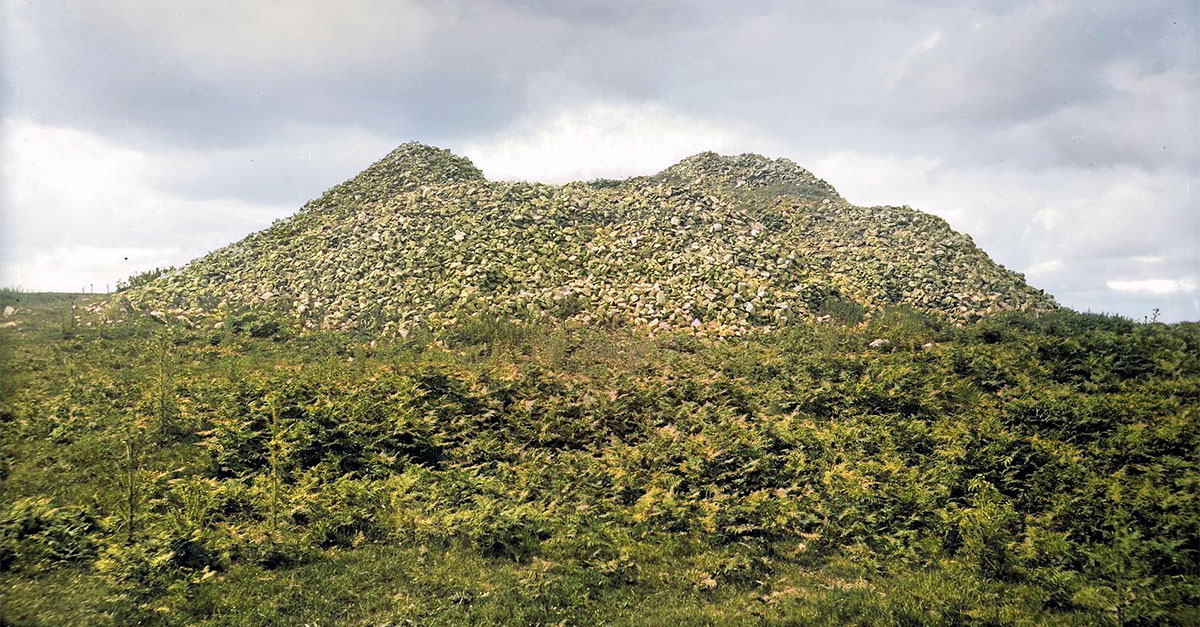
Cairn D is the largest monument at Loughcrew, with a diameter of about 55 meters. Along with Heapstown Cairn and Queen Maeve's Cairn in County Sligo, it is one of the largest unopened chambered cairns in Ireland. It has always been one of my favourite cairns because it is so mysterious; so much effort was spent digging for a chamber, but none has yet been found.
The west side of the cairn, where there is a fallen quartz pillar, may well contain an undiscovered chamber like those in Dowth: very small for the size of the mound.
Cairn D and Cairn L are the two focal monuments on Carnbane West, but despite being only 200 meters apart, niether can be seen from the other. Cairn D is very tall and would have had a flat top before it was damaged, which would have been used to observe the heavenly bodies rising and setting across the landscape around Loughcrew.
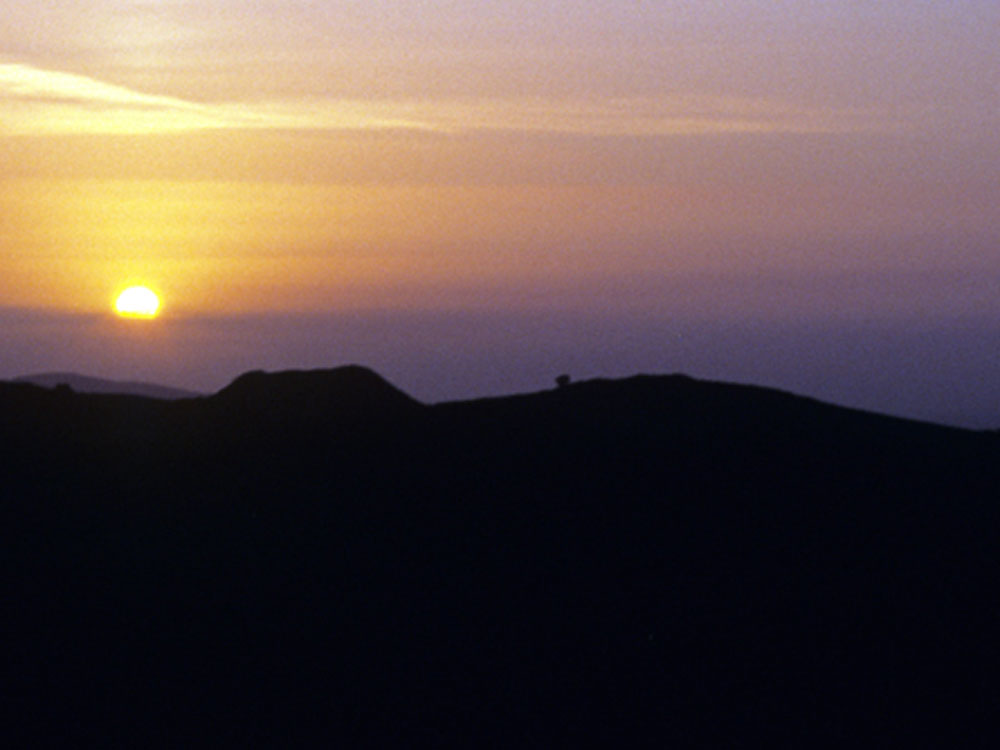
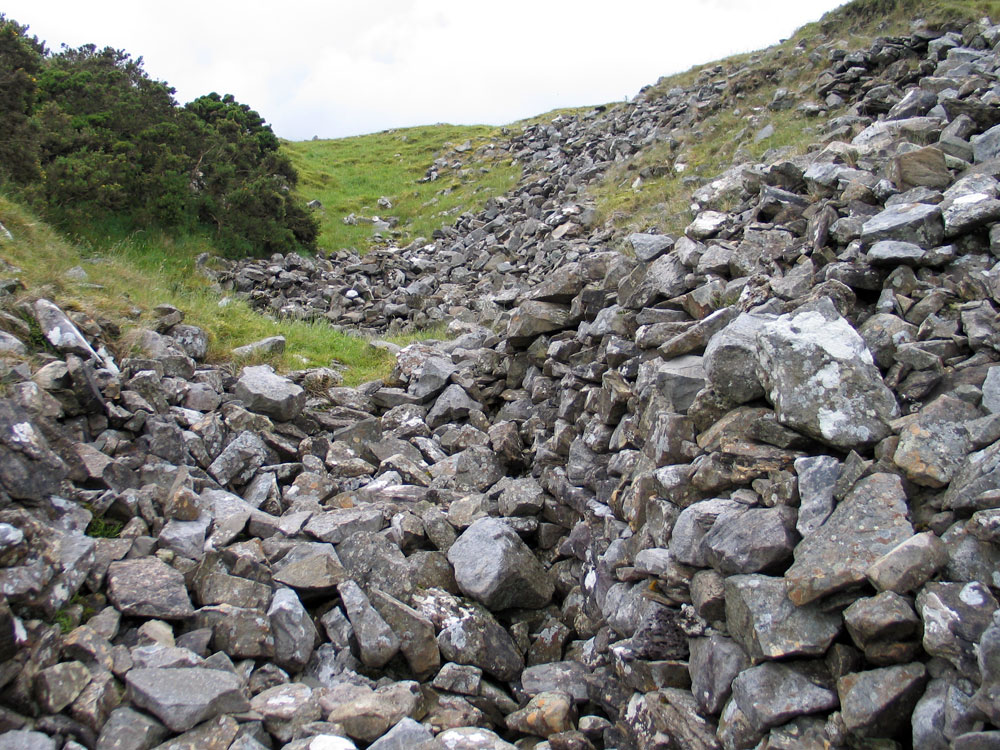
During his work at Loughcrew in 1865, Conwell made two attempts to locate the entrance. On one session he spent nearly two weeks with a group of labourers digging through the cairn. They dug a great trench through the mound beginning on the south east side where the kerbstones curved inwards, usually an indication of an entrance. Many tons of stone were removed, but the chamber was never found.
As with Macalister's excavations in Carrowkeel in 1911, Conwell did not leave the site as he found it, and the massive cairn lies peeled open.
He gave up and decided that the monument must be a cenotaph - a view later endorsed by George Coffey. Cenotaphs, or blind cairns are monuments without chambers, perhaps used as memorials or markers. However, it is highly unlikely that the Loughcrew builders would put so much effort into such a massive cairn and leave it blind. As with Queen Maeve's Cairn in County Sligo, only excavation will reveal a chamber in this greatest of the cairns at Loughcrew.
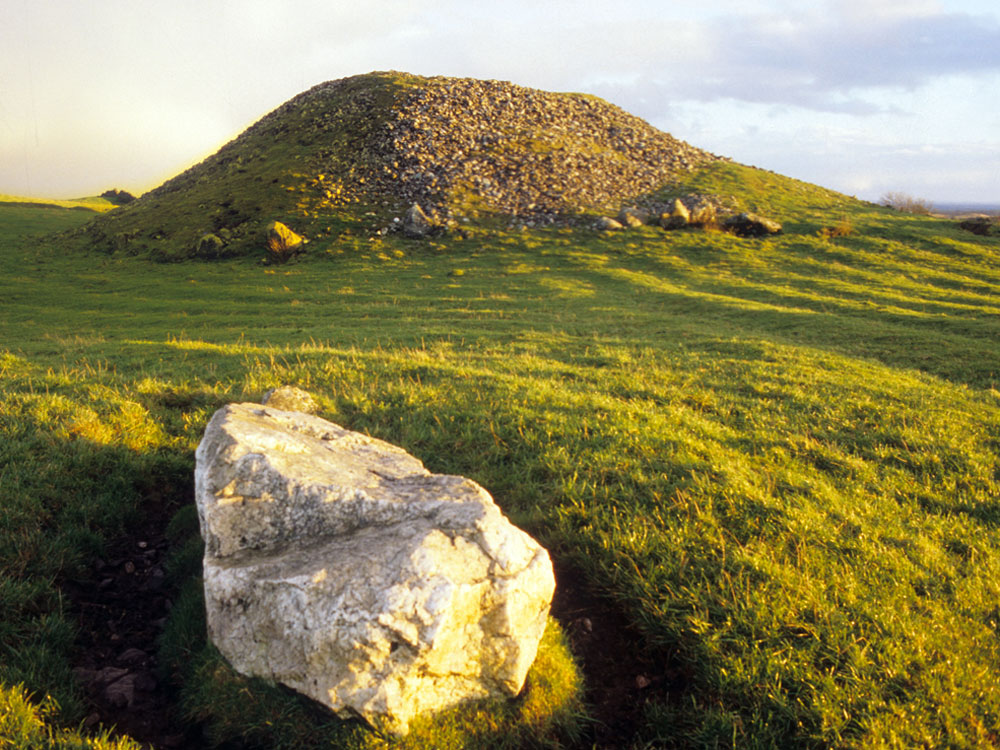
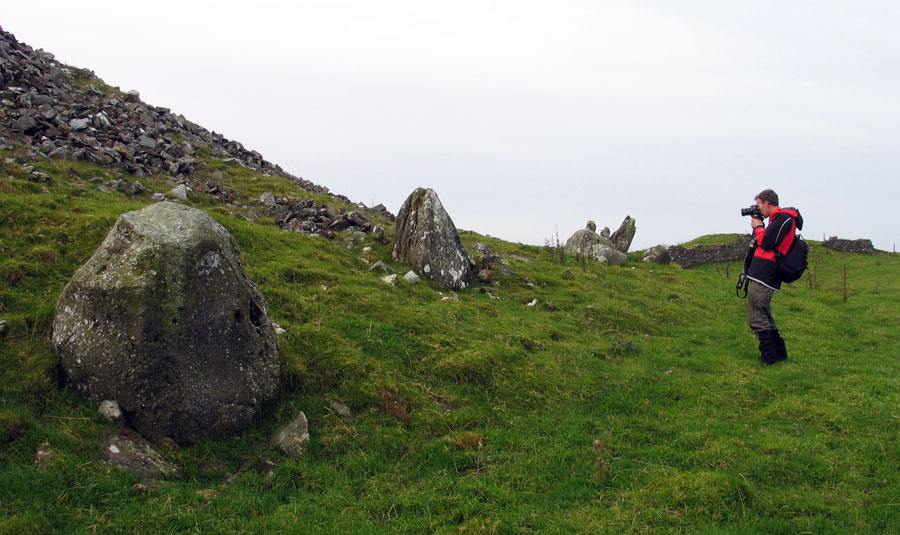
On the opposite side of the cairn to Conwell's excavation lies a massive chunk quartz, which appears to be a fallen standing stone as the stump can be clearly seen in the ground. There are traces of quartz on this side of the cairn too - chunks peep out of the grass around the kerbstones. This quartz pillar probably marks the entrance to the mound, which could be oriented roughly to the summer solstice sunset.
There is a triangular kerbstone which may well prove to mark the entrance if the mound is ever excavated. Standing stones mark the entrances to several other large cairns including Newgrange and Knowth. A similar fallen pillar stone lies about the same distance away from Heapstown Cairn in County Sligo.