Cairns X1, X2, X3 and Y
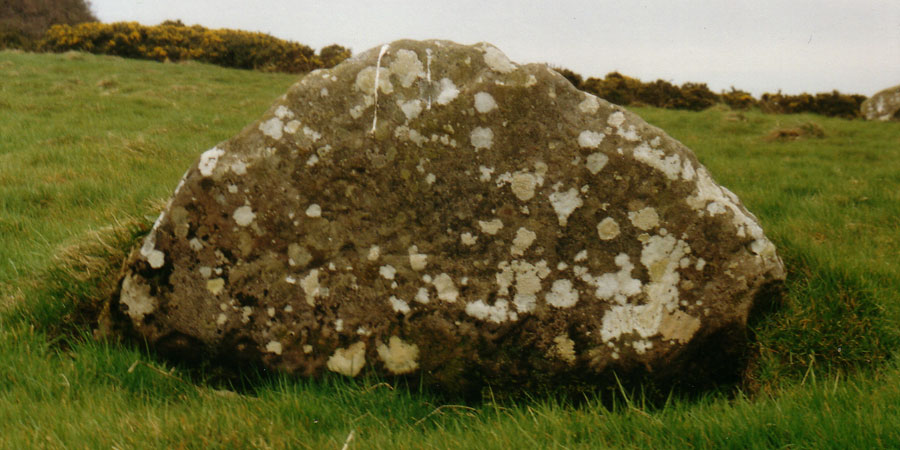
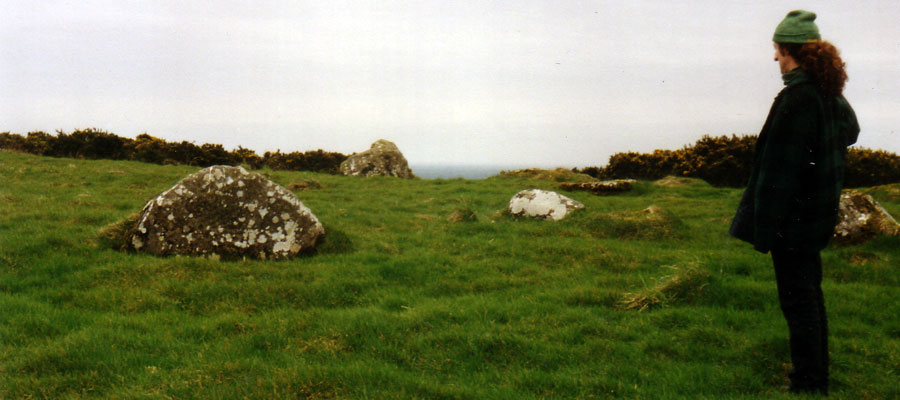
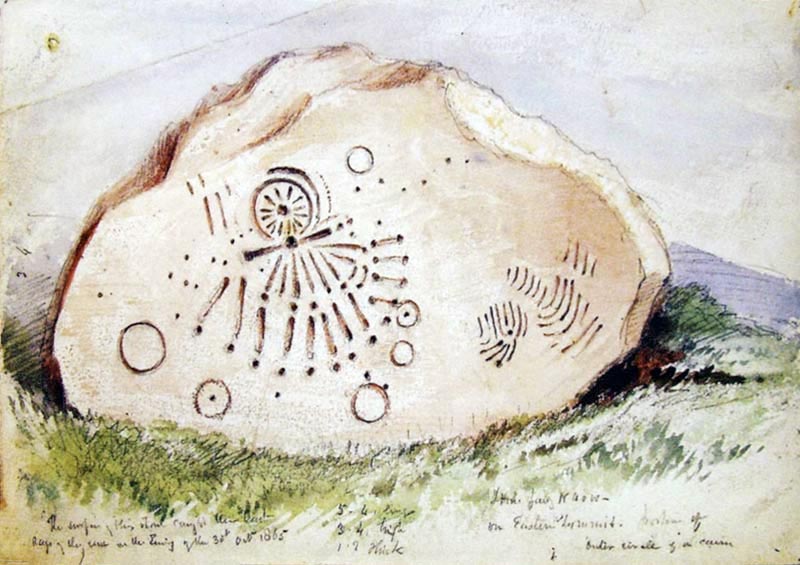
These sites once occupied a piece of land which was cleared and farmed in the 1840's, and many lazy beds, cultivation ridges, can be seen in the area. In more recent times a pine plantation was planted, further obscuring the archaeology. Little remains of these three Patrickstown monuments but a few stumps of stone from X1 and X2; X3 has vanished from sight. One decorated slab has survived near the centre of Cairn X1, and has been dubbed the Loughcrew calendar stone. Du Noyer's rendering of the design is shown below.
The diameter of this monument was probably about 12 meters. A boulder lying outside the kerb may indicate that the passage as oriented west towards Cairn T.
Cairn X2
The boulders of X2 are immediately south of X1. This cairn was approximately 11 meters in diameter. Michael Herity reports that Cairn X3, much ruined, stood 12 meters south-west of Cairn X1. Some of the monuments boulders are probably incorporated into the nearby fieldwall.
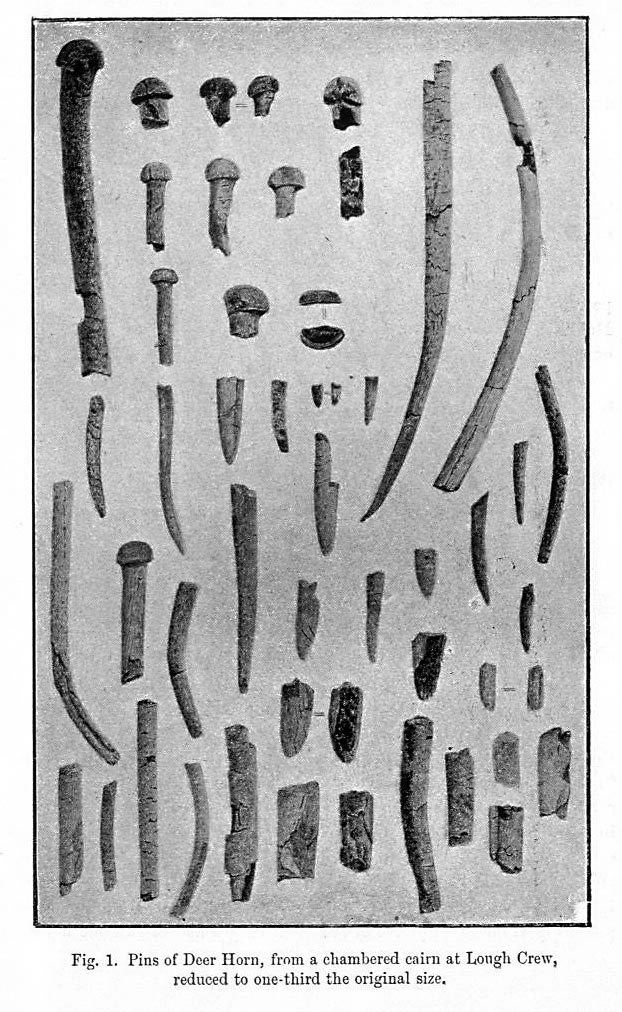
Rotherham examined the monuments and found typical passage mound items: fragments of cremated bone and pottery, pendants, beads and pieces of charred deer antler.
Cairn Y
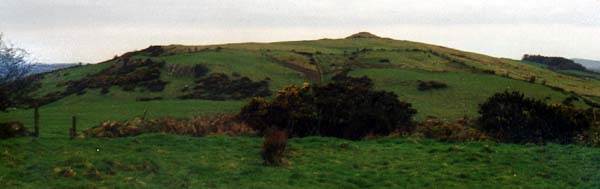
Cairn Y was probably the main mound of the destroyed Patrickstown group of monuments. By Conwell's time it was already much ravaged. It stood on the summit of Patrickstown, 270 meters above sea level. Conwell believed it to have been about 30 meters in diameter.
This area was covered with a pine plantation. I looked for this monument once, but the terrain is pretty rough in there, and in places the trees are quite thick. However, I think I found a low mound with several large pine trees growing there. Not much remains to be seen. In the local folklore Cairn Y was the grave of Garavogue, the hag of Loughcrew and Carrowmore, and the builder of the monuments.
Recent research has identified Cairn Z as a Norman motte, but since the Normans liked to use existing mounds for their mottes, this is quite possibly a re-used neolithic site.