Cairn
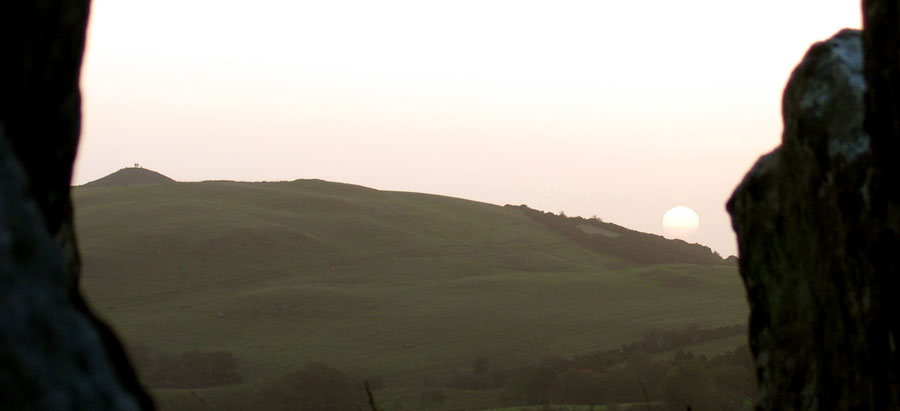
T, the central monument at Loughcrew not long after sunrise on the autumn equinox, 22nd September 2011. The photo is taken from the chamber of Cairn I on Carnbane West. Cairn I is aligned on Cairn T.
Equinox at Loughcrew
We
were winding up the mountain road when the disc of the sun broke on the
horizon. We felt as if we were ten minutes late for an appointment made
over 5,000 years ago. From the top of the road there would be a climb
on foot to the mound perched on the summit of the mountain. The lock on
the modern door leading to the passage had frozen during the night, and
as we struggled with it the rising sun was already above the horizon.
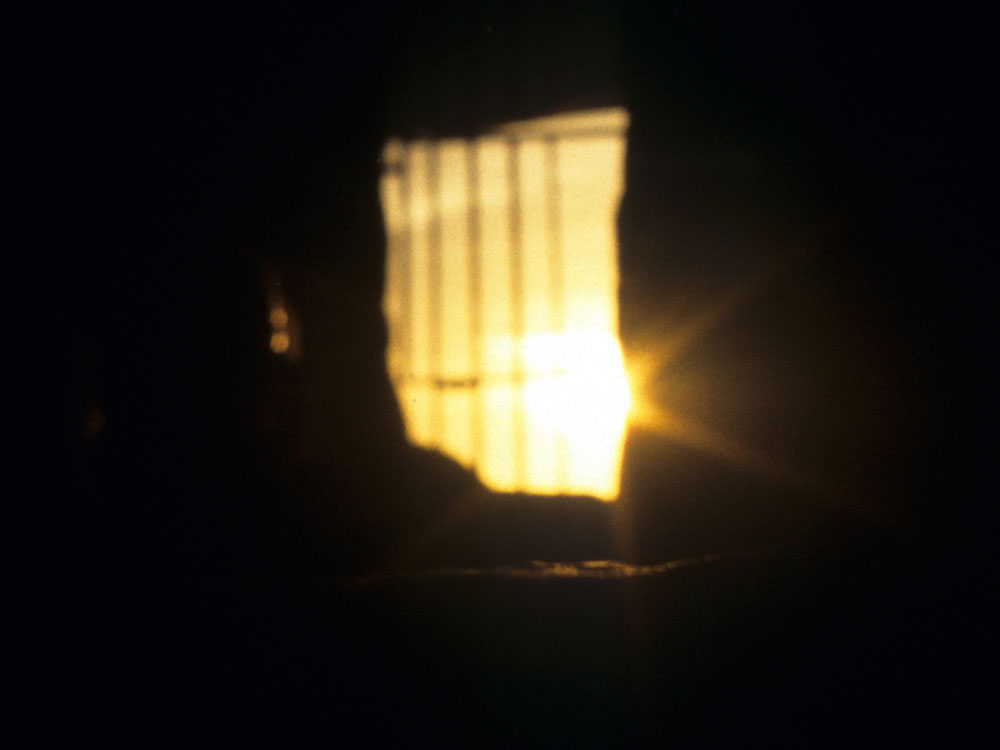
When we drew back the door a narrow chink of light streamed down the passage
and flashed into the end recess of the chamber.
Martin Brennan, The Stones of Time
Outside
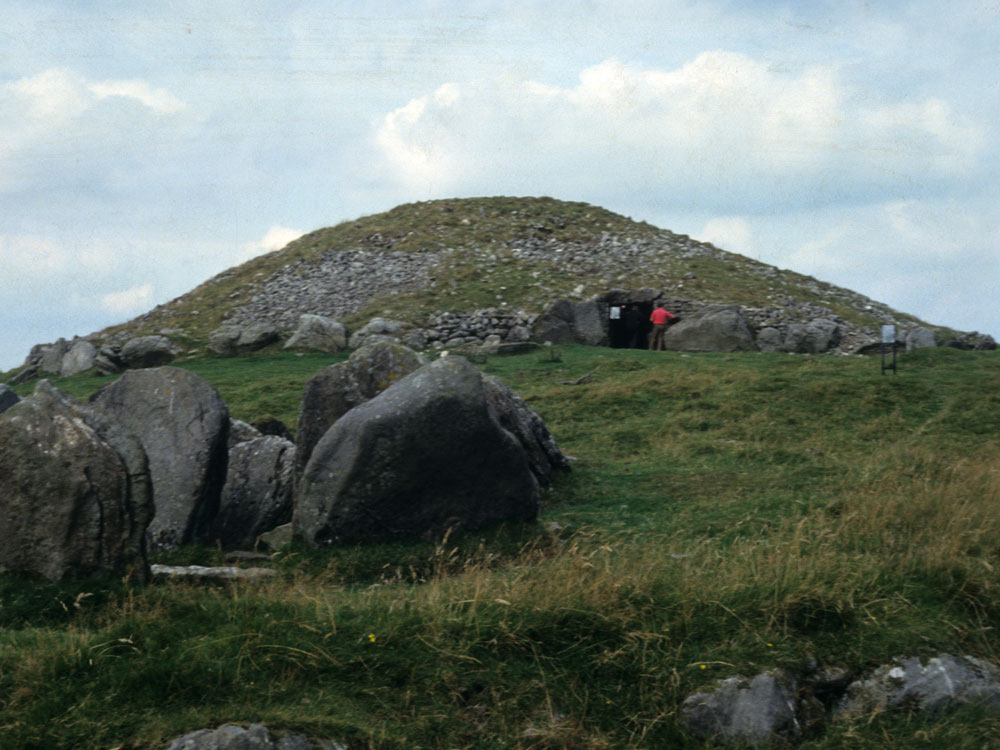
Cairn T on equinox morning, taken from Cairn
V.
American
researcher Martin Brennan has made great advances in the understanding
of the role of astronomical orientations of chambered cairns.
During his work in Ireland in the eighties he rediscovered two
major solar alignments at Loughcrew. His discoveries are detailed in his inspiring book, The Stones of Time. Brennan and his co-researcher Jack Roberts observed that the passage and chamber of Cairn T are oriented to the equinox sunrises.
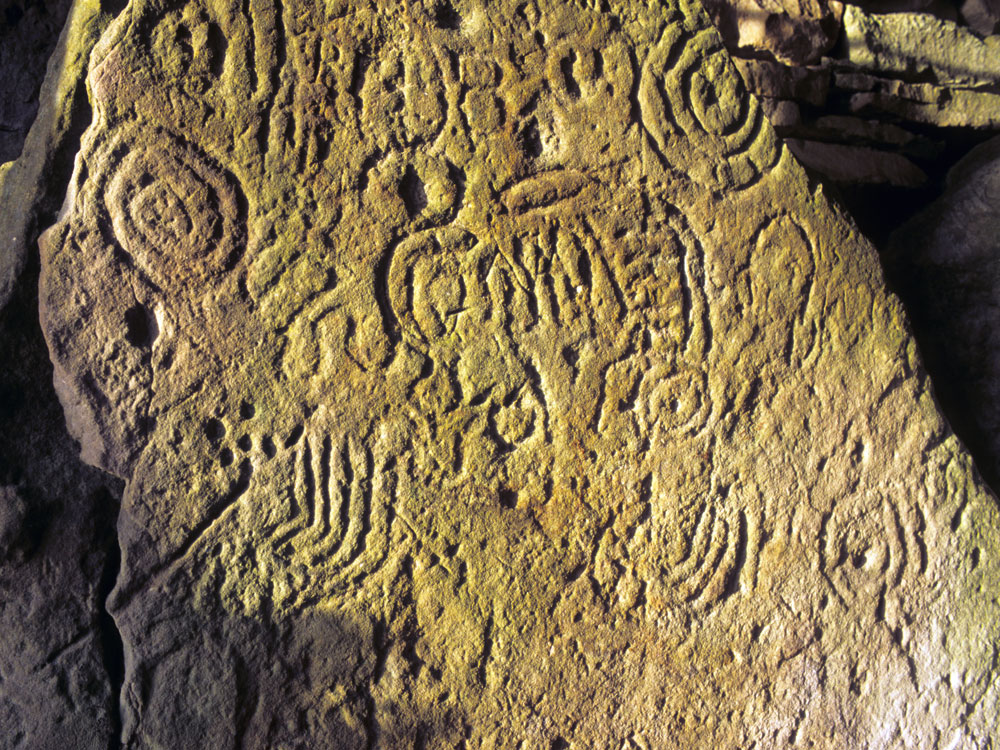
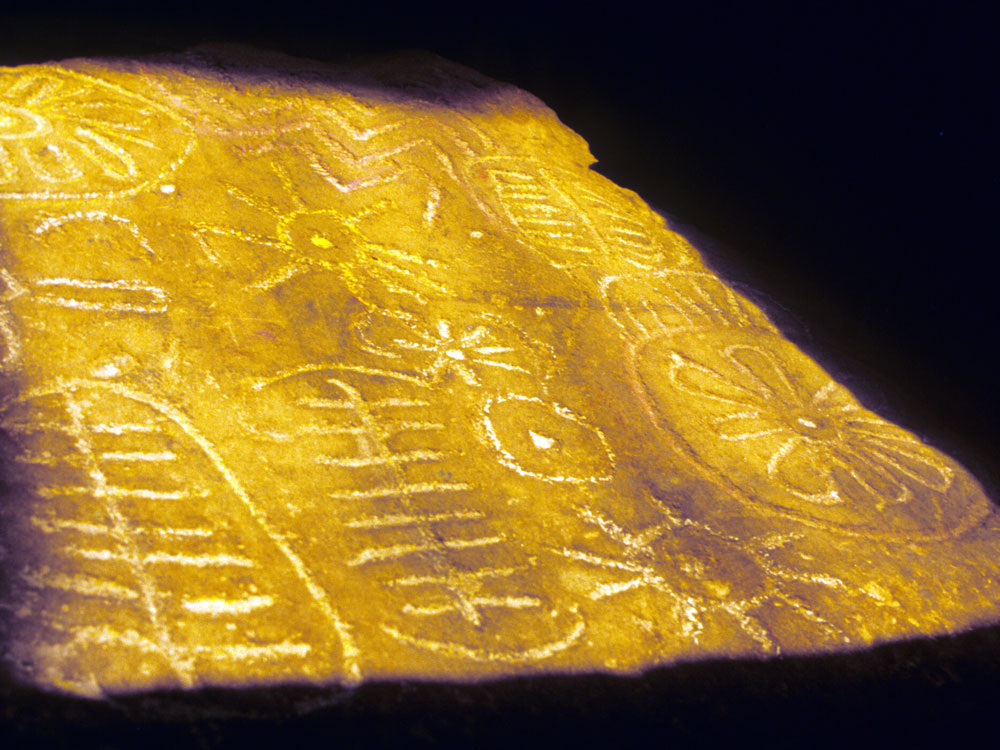
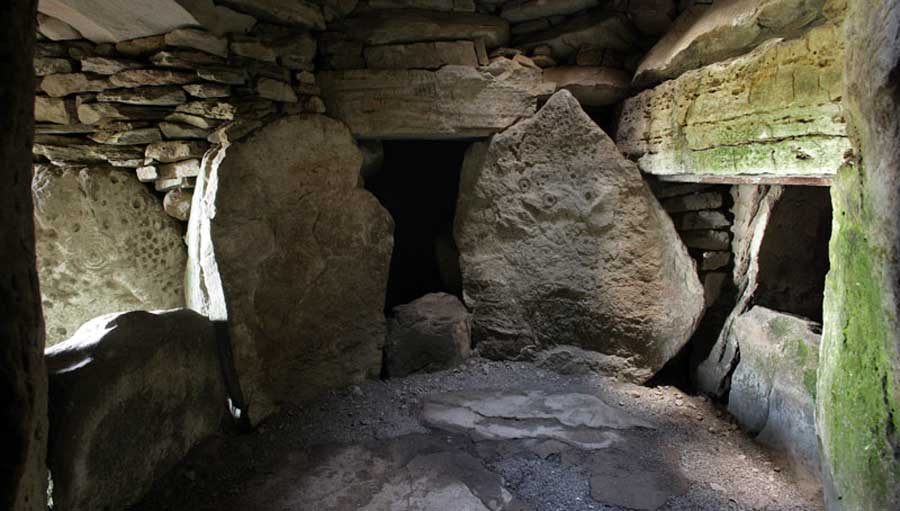
Engraved stone in the passageway of Cairn T on an equinox morning, as the sun is streaming into the chamber. The art comes to life in the sunlight.
In general,
on the equinox the sun will rise due east all over the world. On the horizon the sun is moving at its fastest ove the equinox, as opposed to the solstices when it slows to a standstill. Over the equinoxes the sun wheels around the sky, twelve hours of light and twelve hours of darkness. Full moons on equinoxes around the hills of Loughcrew are especially magical.
Cairn T.
Ancient Astronomers
Waiting
for the sun: view of the equinox sunrise as it enters the passage of Cairn
T, taken from the rear recess.
At Cairn T, the sun does not enter the chamber until it has risen well
over the horizon. This is because the monument is aligned 8°
south of east - possibly to account for the different declinations
of the sun at spring and autumn equinoxes. According to Brennan, the sun can enter the chamber for a maximum of six days over the equinox.
When the sun first enters the chamber, the whole top panel of the keystone is illuminated.
The passage orthostats, sillstones and roof all combine to shape the beam
of sunlight into a large rectangle of light which forms on the backstone
of the end recess. As the sun rises in the sky, the shape of the light
beam in the passage changes, and the rectangle of light shrinks, moving
down and right. Repeated observation has shown that the complex engravings
of the backstone are carefully positioned markers used to calibrate the
day of equinox. It is quite possible that the beam runs on a four year
cycle used to calculate leap years.
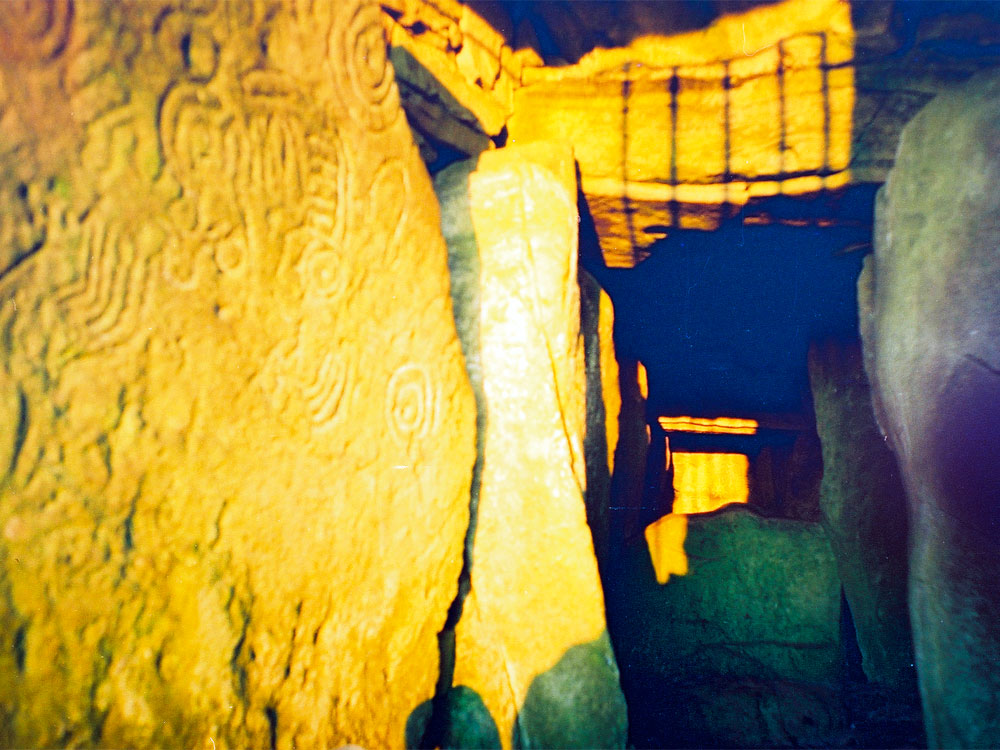
View
of the keystone from out in the passage, as the rising sun floods into
the end recess. No flash was needed for any of these photos; the sunlight
is very bright and warm on the stones, and illuminates the art beautifully.
The Cairn T equinox alignment is a fully functioning neolithic astronomical calendar, lit up in glorious golden sunlight twice each year, weather permitting. The moon shines in as well, though no one has researched it yet that I know of. The moon can enter any chamber that can be reached by the sun.
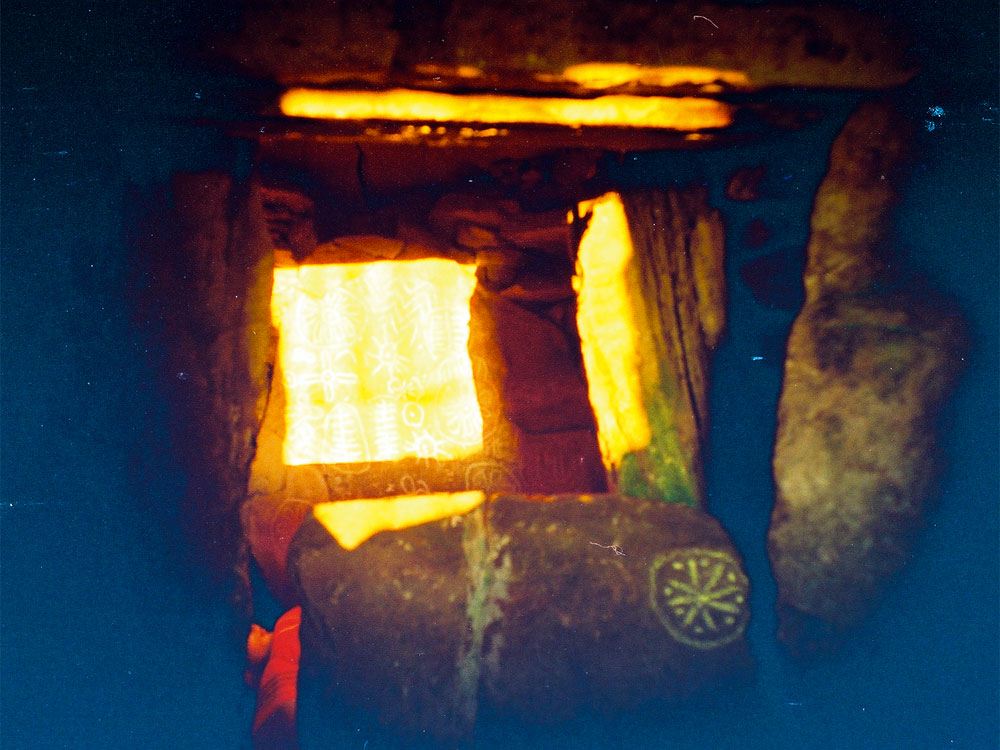
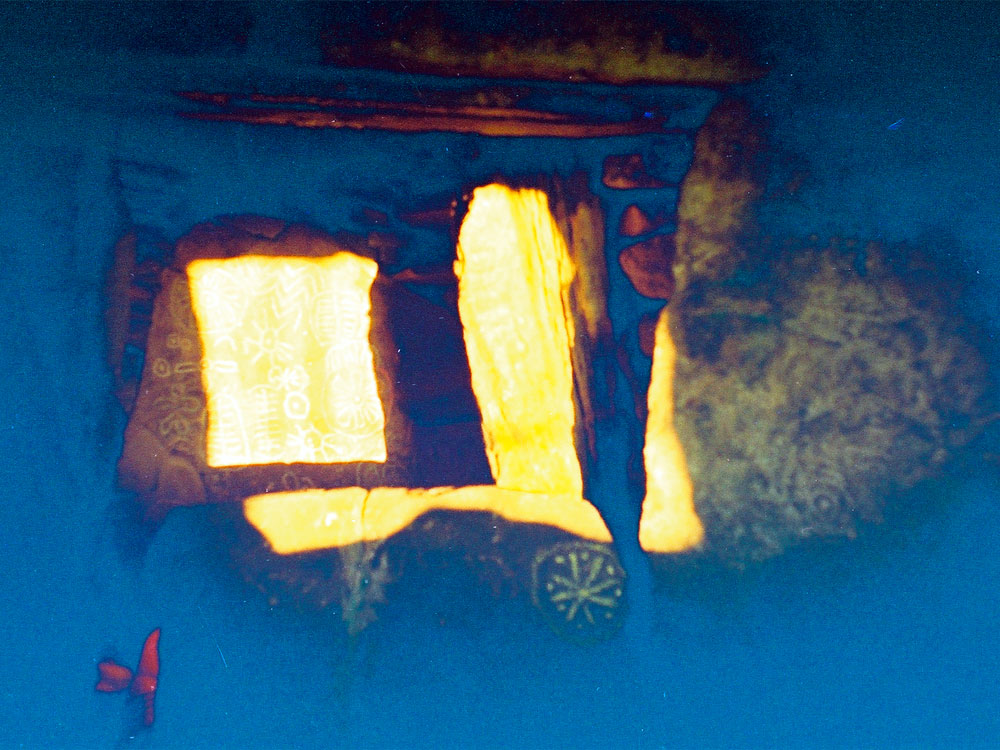
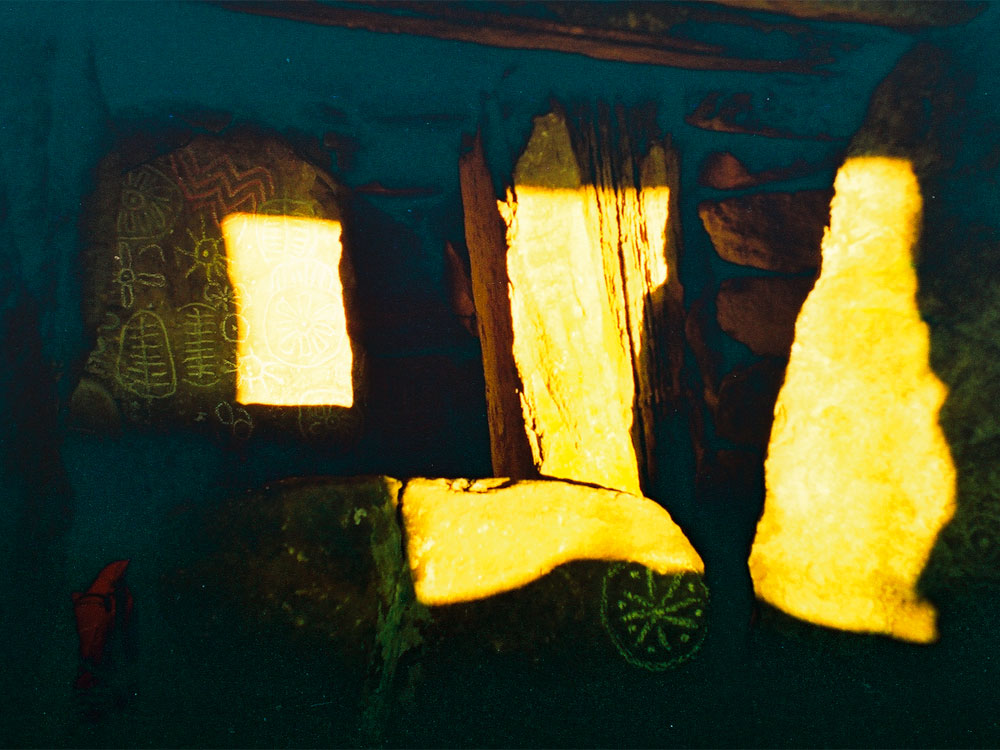
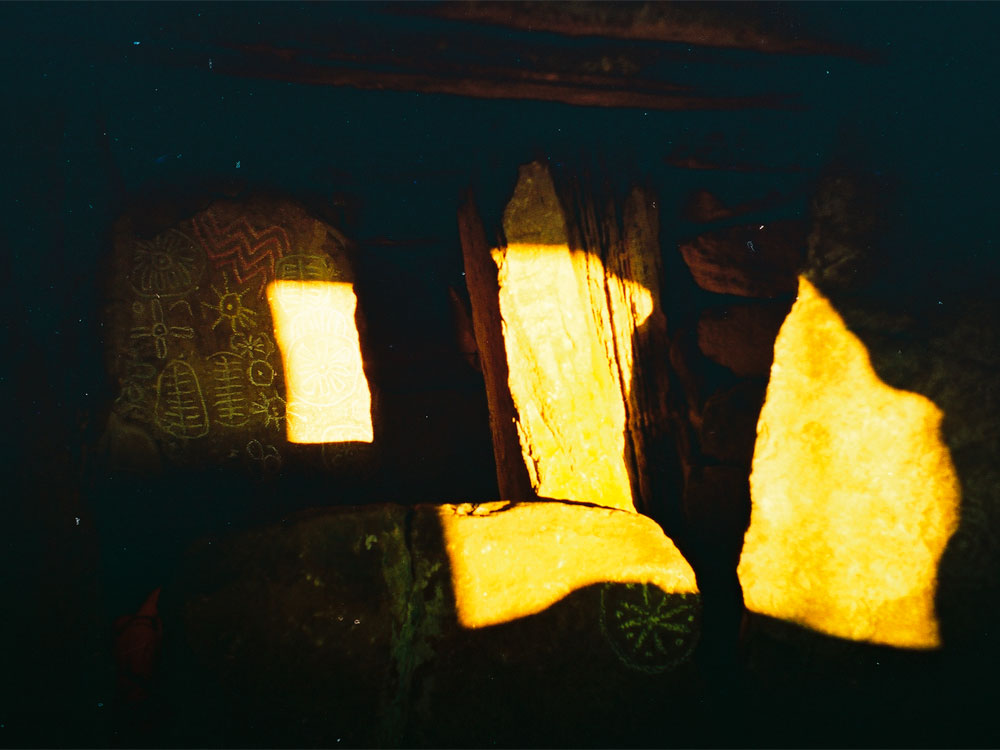
A sequence of photographs showing how the sun moves across the keystone after sunrise. These pictures were taken in the mid 1990s. At the bottom of the page is a Youtube clip of the alignment.
At first the entire surface of the panel that the sun can reach is illuminated.
Note the eightfold circular engraving on the sillstone in the foreground.As
the sun rises higher the beam contracts, moving across the stone to the
right. The beam continues to shrink. Note how it lines up with the engravings. Now
that is art! A
beautiful display of interactive art: the sunbeam can be seen to focus
on the flower/clock design, and uses the calibration markings above as
part of the process.
An
exciting possibility yet to be explored is lunar observations at this
monument. Full moons which fall on or near the equinoxes will also illuminate
the backstone. The workings of the equinox lightbeams across the engravings
on this stone provide a working example of neolithic thought, symbolism
and technology.
The highlighted symbols record the movement of the sun
and moon over the period when day and night are of equil length. The main
sunflower/clock symbol, the Neolithic equivelant of the Celtic cross,
marks off the cardinal points and the solstice sun rise and set positions.
At this latitude the sun travels approximately 90° between solstices,
dividing the sky into four quarters.
Cairn
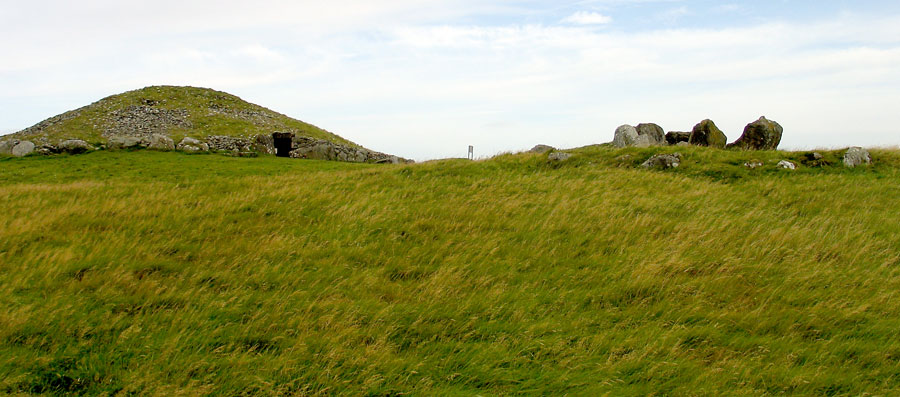
T, the central monument at Loughcrew not long after sunrise on the autumn equinox, 22nd September 2011. The photo is taken from Cairn F on Carnbane West.