The
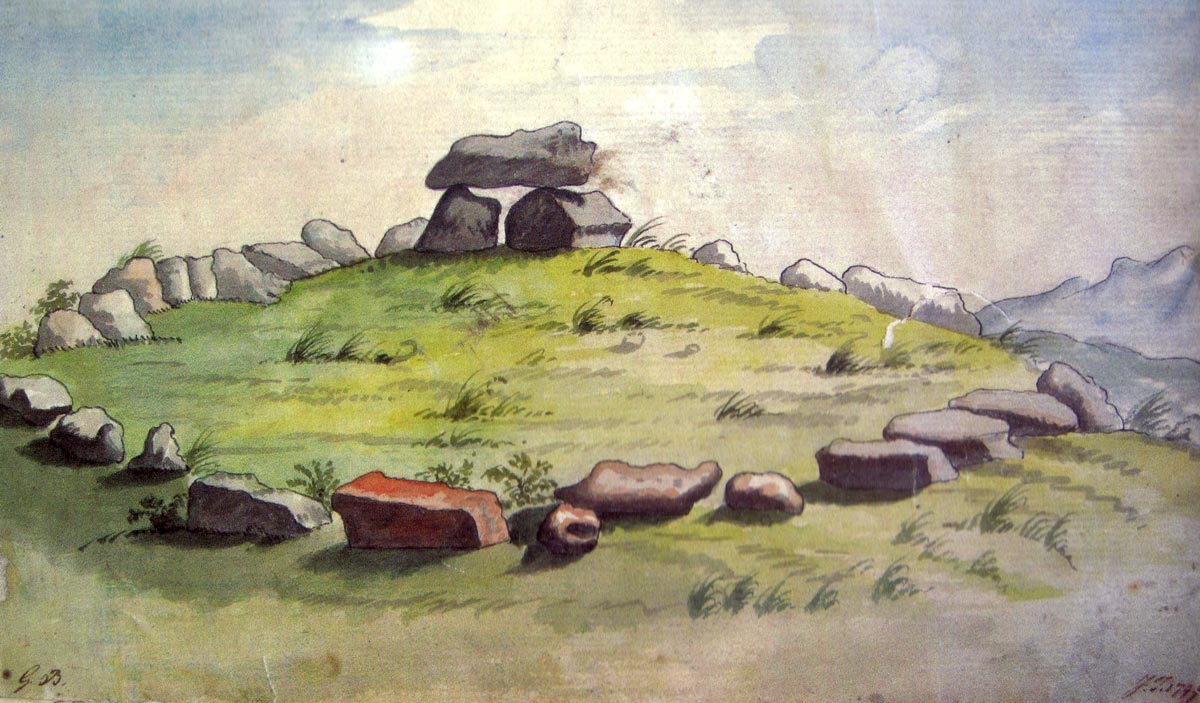
Kissing Stone or Leaba na Fian at Carrowmore in County Sligo, copy of an illustration painted by Gabriel Beranger June 23rd, 1779.
History of research at Carrowmore
The Carrowmore megaliths have been explored and excavated many times, and have a long and interesting history of research. The monuments were largely intact during the earliest visits by William Henry and Gabriel Beranger, and the worst destruction seems to have taken place from 1830 onwards, when circles were broken up or removed. Huge amounts of gravel were quarried to the east of the complex in 1906.
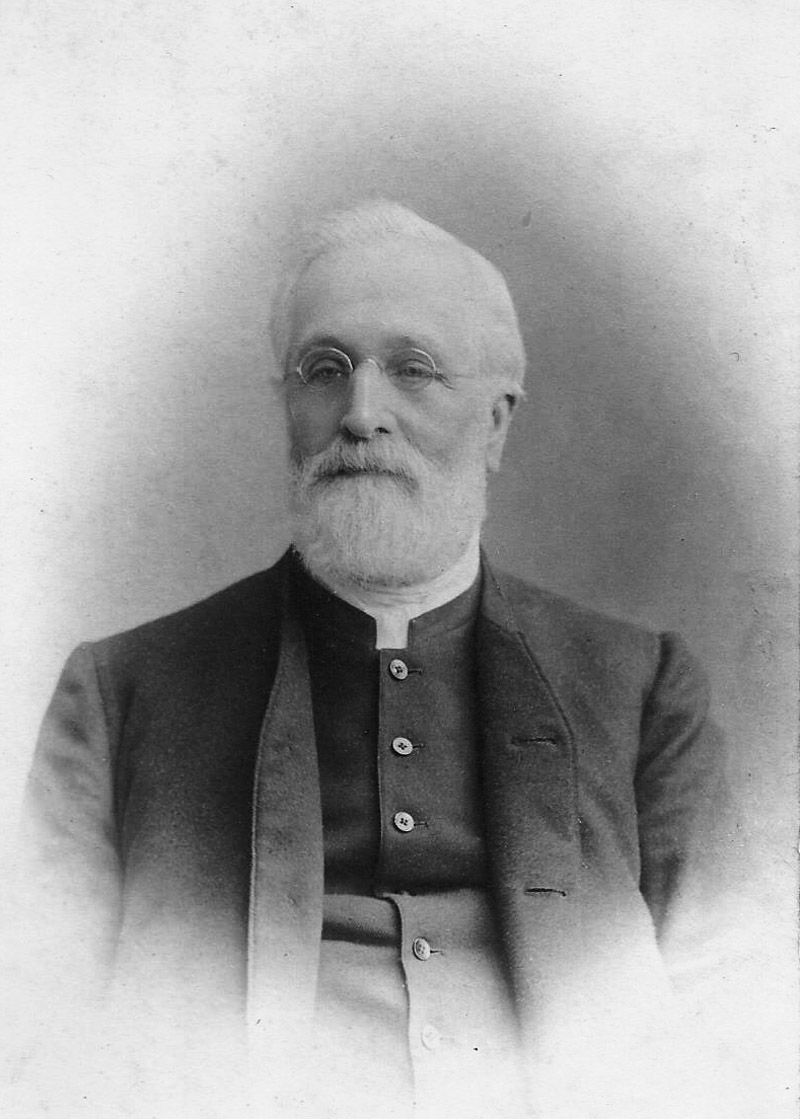
Reverend William Henry — 1739
The first written account of Carrowmore was written by the Reverend William Henry, who may have been a native of County Sligo. Henry described the monuments in his 'Hints towards a Natural and Typographical History of the Counties Sligoe, Donegal, Fermanagh and Lough Erne', published in 1739.
Henry identifies three types of ancient monument, the first being 'Rude Subteraneous Caverns which are under the Danish Forts'—monuments we now class as souterrains within ringforts. The Reverend also drew attention to the large cairns on Carns Hill and Knocknarea.
A Second sort are large Huge Heaps of Stones piled up in the form of a Cone on the Tops of Hills. Beside that Vast one before mentioned on the Top of KnocknaRee, there are several on the Summits of other Hills, particularly two Great ones between the Town of Sligoe and Lough Gill. They are called Cairnes.
Henry went on to describe the third class, the Carrowmore circles.
The third, and in all probability, most Ancient, is of a very curious kind, and is generally seen in large Plains.
An Exact Circle of about thirty feet in Diameter is described. This is set about with large Flat Stones, each Stone about three or four feet high, standing on their end sunk in the Ground. It takes about fifty of these Stones to form this Circle. In the Centre of this large Circle are Erected in the Form of a Coffin, other Stones of the same kind, and standing up in the same manner, but somewhat larger. Four of these Stones generally forming each side of the Coffin—for so I will call it—and one on each End. The Space within is the Grave. On the Top of these Ten Stones standing on their Edge, is erected a Tombstone, a Monsterous Rock, the underside of which is flat, and Rest on the upper Edges of the Stones which form the Coffin. It is Difficult to imagine how these Ancient Rude People, who knew not the Powers of Levers, could raise and fix, so exactly, such Huge Rocks, many of which weigh above twenty Tons. It probably was done by raising a Slope of Earth about the Coffin, to mount the Tombstone Rock by, which Earth, after its being fixed, was carried away. Of this kind of Monument there are a great many—I believe one hundred—in the large Field of Carrowmore which is a Mile to the South West of Sligoe Town on the Road to Clover Hill.
Henry went on to speculate as to the origins of the builders of the Carrowmore monuments:
What Ancient Nation inhabiting Ireland contrived the last described Supulchral Monument, it is not easy to ascertain, probably these Aborigonals were the same with the Gauls and Druids, the first inhabitants of Great Britain. These kind of Monuments being found in some parts of Great Britain, and nearly resembling that stupendous one of Stone Henge in Salisbury Plains which is supposed to be the Work of the Ancient Gauls and Druids.
Gabriel Beranger — 1779
Gabriel Beranger, a Dutch artist of French parentage who was resident in Dublin, visited Carrowmore in 1779 during his Tour of Connaught. Beranger and his Italian companion Angelo Begari, had been commissioned Hibernian Antiquarian Society to illustrate and measure the ancient ruins and monuments of Connaught for publication. They were supplied with an interpreter, Terrence McGuire, a schoolmaster from Fermanagh, as Beranger spoke no Irish and indeed Bigari had but little English.
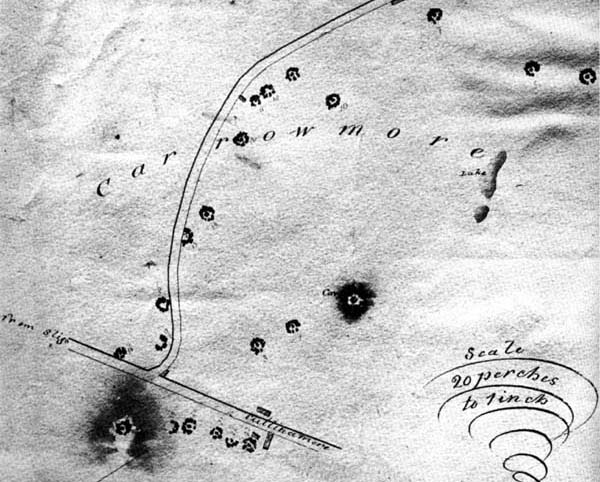
During their time in Sligo the artists stayed with the Irwin family in Tanrego, and Lewis Irwin, himself an enthusiastic antiquarian, acted as their guide and showed them many sites in the locality. Bigari did not travel the trip to Carrowmore, so on June 23rd, St. John's feast day and bonfire night, Beranger became the first person to map the Carrowmore Circles:
June 23rd, Mr. Bigary not wishing to ride, I went with Mr. Irwin and his son on horseback to Knocknareagh mountain, — seen on the lands of Carrowmore, in the space of a square a quarter of a mile, eighteen circles of huge stones, some with their Cromleghs in the center standing, some down, but the stones lying on the spot; designed and planned the largest one.
Sure it is, that they are not Temples, nor the Cromleghs altars, as the antiquarians pretend, but burial places of chieftains. These eighteen together ( I think ) settles the matter, and prove this place to have been either a cemetery, or the spot where some famous battle was fought, and the heroes which fell to have been interred on the field where they were slain; but I believe, if some of the antiquarians had heard of eighteen being together in one spot, they would not have called them Temples.
The first map of Carrowmore drawn by Gabriel Beranger, June 23rd 1779. The cottage which now houses the Carrowmore Visitor Centre is marked on the map.
Beranger was one of the first to view these monuments as burial places, rather than contemporary romantic notions of the monuments being druids altars or temples, and he also demonstrates a knowledge of religious intolerance:
If the Cromleaghs and circles of stones were altars and temples, they surely would have been destroyed by the Christians, as they demolished all the religious monuments of the Pagans; but being known to them as but burial places, or Mausoleums of the dead, they respected them, and left them untouched.
Roger Walker — 1806 - 1854
Roger Chambers Walker, born in 1806, was a Queen's Counsel and local landlord, with a passion for collecting relics from ancient monuments. Walker opened and cleared out many of the Carrowmore monuments, keen to find artifacts to add to his collection in the private museum he kept at Rathcarrick House on the east side of Knocknarea.
Walker was 'on terms of great friendship' with George Petrie, the 'father of Irish Archaeology', and they were in contact from at least 1828, when Walker was just 22 years of age and studying to be a barrister. Petrie wrote with questions for Walker to verify about Sligo antiquities and legends, in relation to his work with the Ordnance Survey, and they both swapped and traded artifacts with the other.
It is not known when Walker began digging in Carrowmore—he kept poor records of his excavations. His finds are mainly known from records of sales and comments made by Petrie in notes and letters. Petrie stayed with Walker in Rathcarrick House at Knocknarea, when he surveyed Carrowmore in August 1837. Walker acted as Petrie's guide and helped him survey the monuments. In 1844 Walker was planing to open the 'Virgin Cairn' on Knocknarea in the presence of British politician and Sligo landlord, Lord Palmerston, but the event never happened. Walker's father, James, acted as Land Agent and rent collector for Palmerston's estate ar Ahamlish in North Sligo.
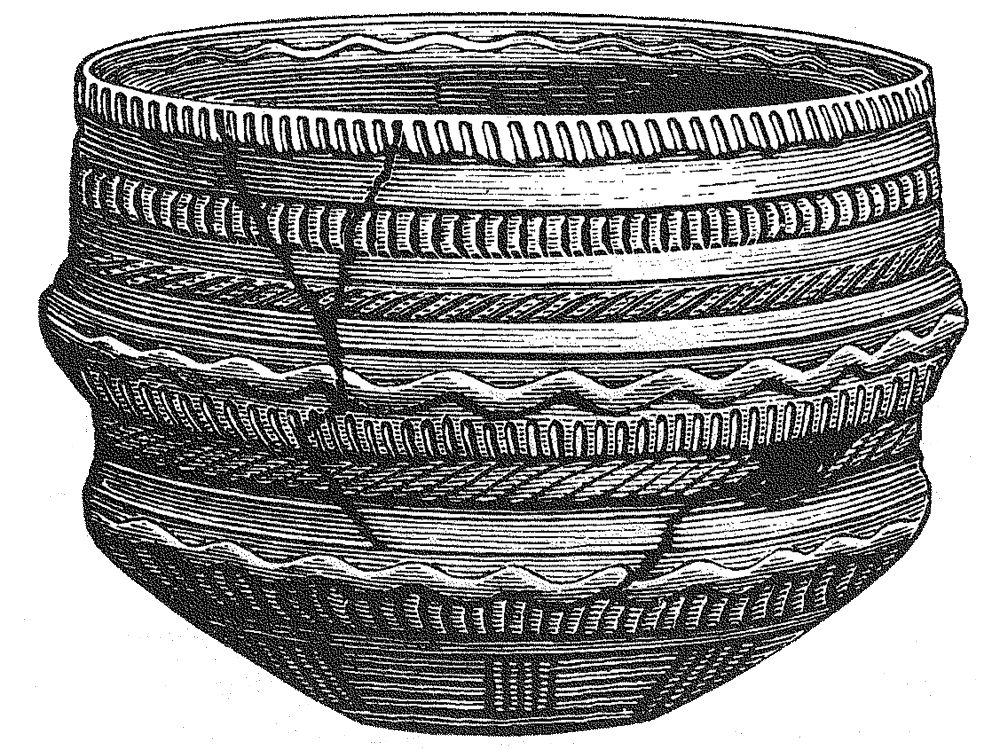
Walker found a twisted gold torc in one of the larger circles at Carrowmore, dating from Bronze age reuse of the Carrowmore monuments, but it is not recorded in which circle it was found. He found a late neolithic flint javlin in the chamber of Listoghil, and a Bronze age pot and pin in Circle 17. He excavated the large cruciform chamber at Barnasrahy about one kilometer north of Carrowmore and found many pieces of quartz and a fine Bronze age food vessel.
The Barnasrahy pot, excavated by Walker, still resides in Alnwick Castle.
About a year before his death in 1854 he sold his collection of antiquities to the Duke of Northumberland, and many fine artifacts are still curated in the museum at Alnwick Castle. The majority of the collection was resold to the Royal irish Academy and some of the articles are on display in the National Museum in Dublin.
Roger Walker is a fascinating character, and a paper has been published by Aideen Ireland covering his life and career.
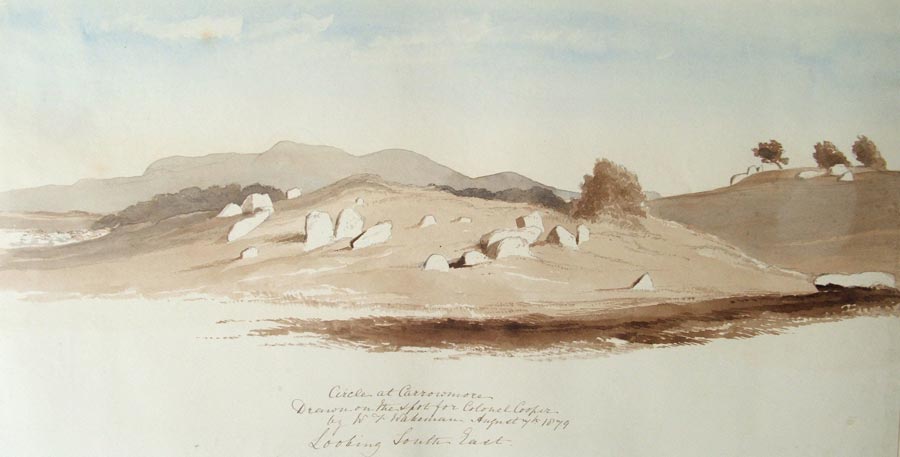
A circle, possibly Circle 22 at Carrowmore, illustrated by William Wakeman, August 7th, 1879.
George Petrie — 1837
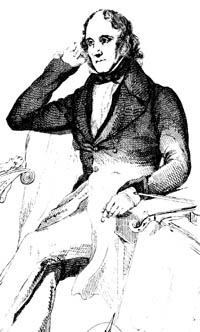
George Petrie.
Considered by many to be the founder of modern Irish archaeology, George Petrie was also an artist, musician, collector, writer, and much more. During the 1830's he was working for the Ordnance Survey and on August 2nd, 1837 he arrived at Rathcarrick, the house of his friend Roger Walker to commence his survey of the Carrowmore circles.
Of the existence of these monuments in Sligo, Petrie had previously been in some degree acquainted by a passage in a MS. diary of the artists commissioned by the patriotic Colonel Burton Conyngham for the purpose of making antiquarian drawings in the West of Ireland towards the close of the last century. But the description by these gentlemen conveyed no idea of the number of these remains, which are here grouped in a limited space.
Life of Petrie by Stokes.
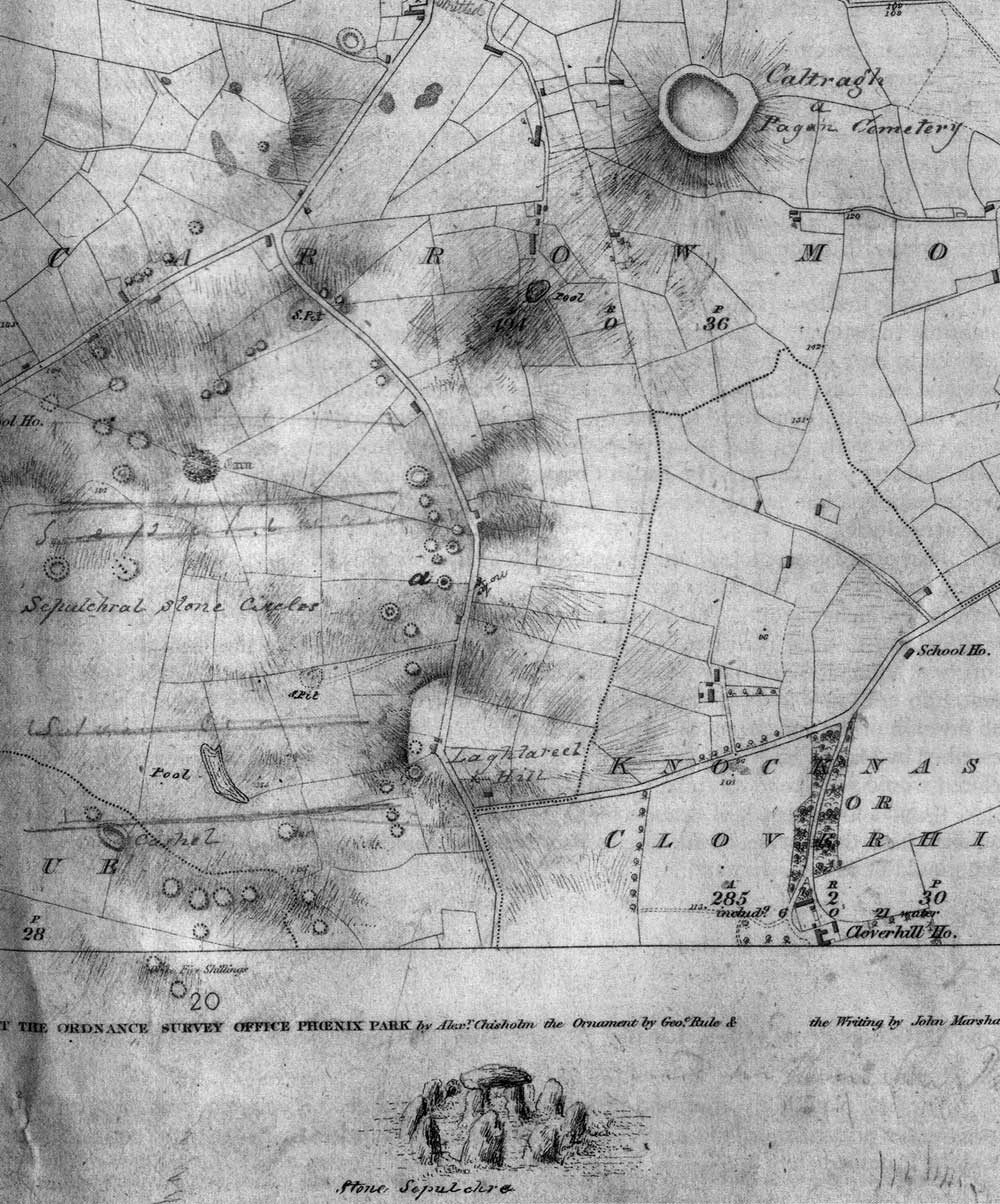
A series of letters in the Ordnance Survey archives record the details of Petrie's survey. He was guided around the circles by Roger Walker, who had already cleared the chambers of a number of monuments, discovering some valuable artifacts which were in his private collection at Rathcarrick.
Petrie numbered a series of monuments totalling sixty-five, in which he included sites dating from later periods, such as the Caltragh, most likely an Iron age monument, and a number of Bronze age barrows. Though today is is accepted that the total number of monuments probably never exceeded forty, we still use Petrie's numbering system for the Carrowmore circles.
Petrie also collected artifacts, and is known to have possessed a bronze pin from Carrowmore probably Circle 17, no doubt obtained from Walker. Petrie was a music collector and published The Ancient Music of Ireland, a volume of tunes and songs he had obtained, in 1855. During his stay at Rathcarrick in 1837 he noted down a slip jig called The Silken Article, among other songs and tunes from a servant named Bridget Monaghan.
George Petrie's draft map of Carrowmore from 1837.
Petrie wanted to survey the Sligo monuments with his collegue in the Ordnance Survey, John O'Donovan; but after a trip to Inishmurray and a visit to Knocknarea, O'Donovan was called back to Dublin before Petrie could meet with him. Petrie spent about ten days at Rathcarrick House and complained about poor health in a number of his letters:
Rathcarrick - August 7th 1837.
My dear Larcom,
When I last wrote to you, I was suffering from severe illness, from which I am now only completely recovered, after a confinement to bed for three days. In fact I have had a wonderful escape from fever of which I had every symptom. This will account for my silence. I have, however been at work for the last two days noting over the Parish of Killaspugbrone, and examining the tracings, and I have added many important monuments which have been overlooked. I am just now starting to make a similar examination of the Parish of Kilmacowen—the parish in which all the Cromleacs and circles are. I very much fear that the opening of the Carn of Queen Meve is for the present out of the question. It would require more time than I could give to it and so her Majesty has leave to rest a while longer in peace.
It is astonishing what a multitude of ancient monuments of the Belgians are in this country. One can hardly look over a ditch without seeing a rath, or a cromleac, a cairn or a stone circle.
I had promised you a detailed account of my visit to Moy Tuire, and you shall have it yet, but I cannot lose any of this fine day writing, while there is so much to be done out of doors. So I shall request you to believe me ever,
My dear Larcom,
faithfully yours,
George Petrie.
William Wakeman
William Frederick Wakeman, a Dubliner—taught to draw by George Petrie—was an artist and antiquarian who specialised in archaeological themes. Wakeman worked as a draftsman at the Ordnance Survey in the Topographical Department. After the Ordnance Survey he taught drawing at St. Columba's College in County Meath and later at the Portora Royal School in Enniskillen, where Oscar Wilde was a student. In 1848 at the age of twenty-six, he wrote and illustrated his first book, A Handbook of Irish Antiquities.
The archaeologist and artist William Wakeman.
In later life Wakeman had largely given up art for antiquarian pursuits; nontheless, in the late 1870's he undertook a comission from Colonel Cooper of Markree Castle, to illustrate the monuments of County Sligo and areas of adjoining counties. He completed a beautiful series of sketches in 1879 and 1880, and made some wonderful illustrations of the Carrowmore monuments one hundred years after Beranger's visit. Wakeman was a friend of William Gregory Wood-Martin and helped him excavate several monuments in Carrowmore, and also provided many illustrations for Wood-Martin's archaeology books.
Wakeman's sketchbooks are kept by Sligo County Library; a second series of illustrations detailed the remains from Inishmurray, and soon afterwards Wakeman published a book on the Island. His Carrowmore illustrations are reproduced on their respective pages on this website.
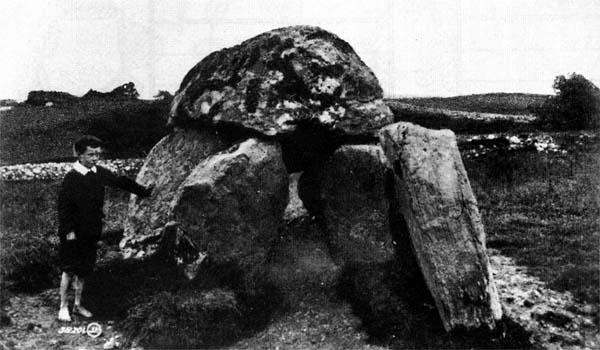
Carrowmore dolmen number 13, in an undated photograph from the Lawrence collection.
William Gregory Wood-Martin 1847 - 1917
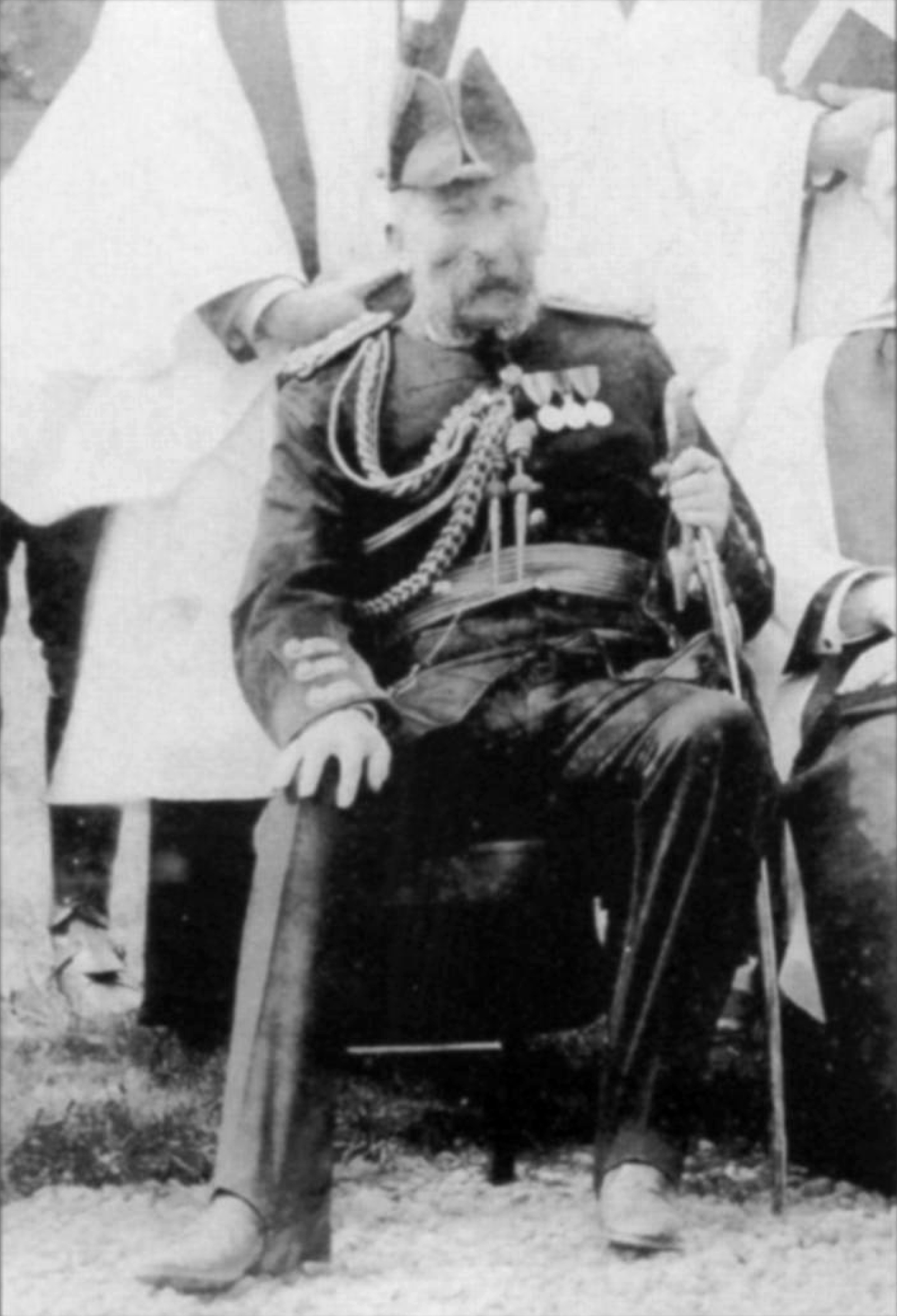
Wood-Martin was a local Sligo landowner and military man with a keen interest in archaeology. He was a prolific author, writing many books including the History of Sligo, Town and County in three volumes between 1882 and 1892, The Battle-ground and Ancient Monuments of Northern Moytirra in 1884, The Lake Dwellings of Ireland in 1886, The Rude Stone Monuments of Ireland and the Island of Achill in a series between 1886 and 1888, Pagan Ireland in 1895 and Traces of the Elder Faiths of Ireland in 1901.
Wood-Martin decided to that it would be worth while to investigate the Carrowmore monuments to see if any artifacts had escaped Walker's diggings fifty years earlier. Wood-Martin carefully excavated the Carrowmore chambers in the early 1880's and made many interesting discoveries, which he published in 1888, illustrated with engravings after paintings by both Charles Elcock and William Wakeman.
W. G. Wood-Martin photographed in full military regalia, shortly before his death in 1917.
A conference titled Cromlechs, crannógs and cures was held in Sligo in 2017 to discuss Wood-Martin's contribution to Irish and Sligo archaeology.
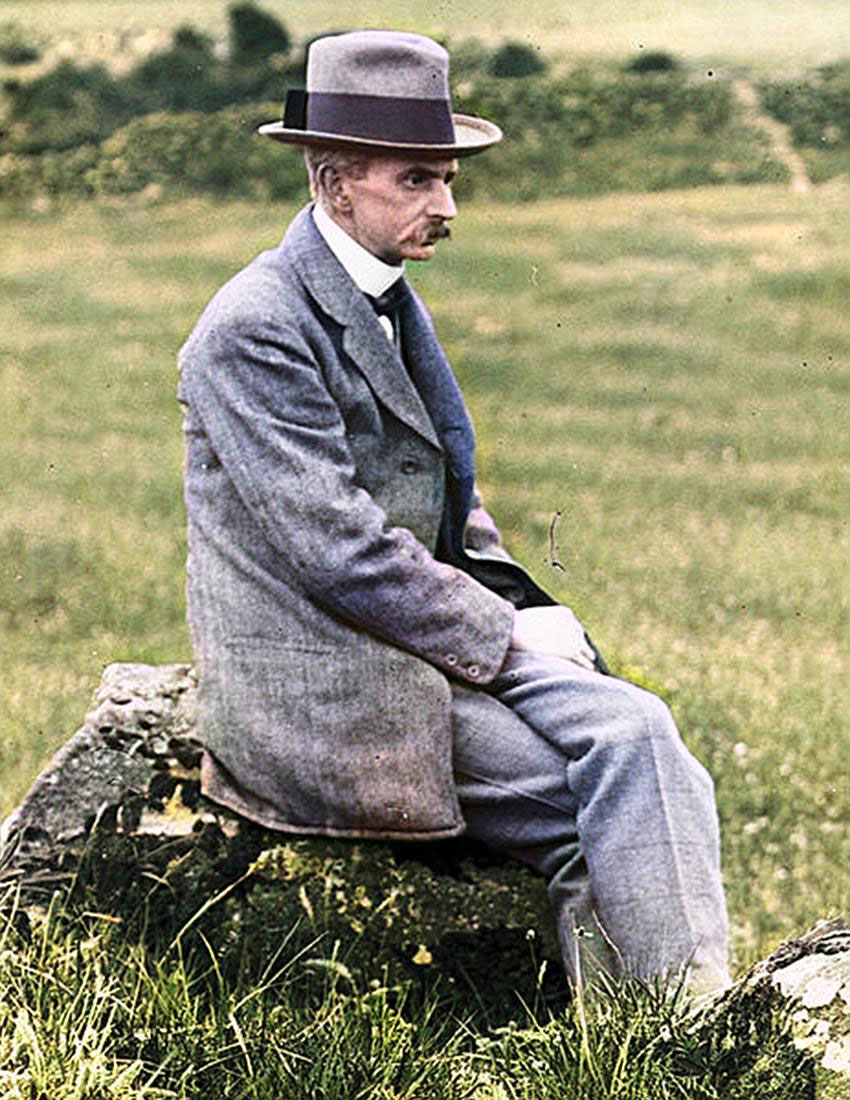
Charles Elcock 1834 - 1910
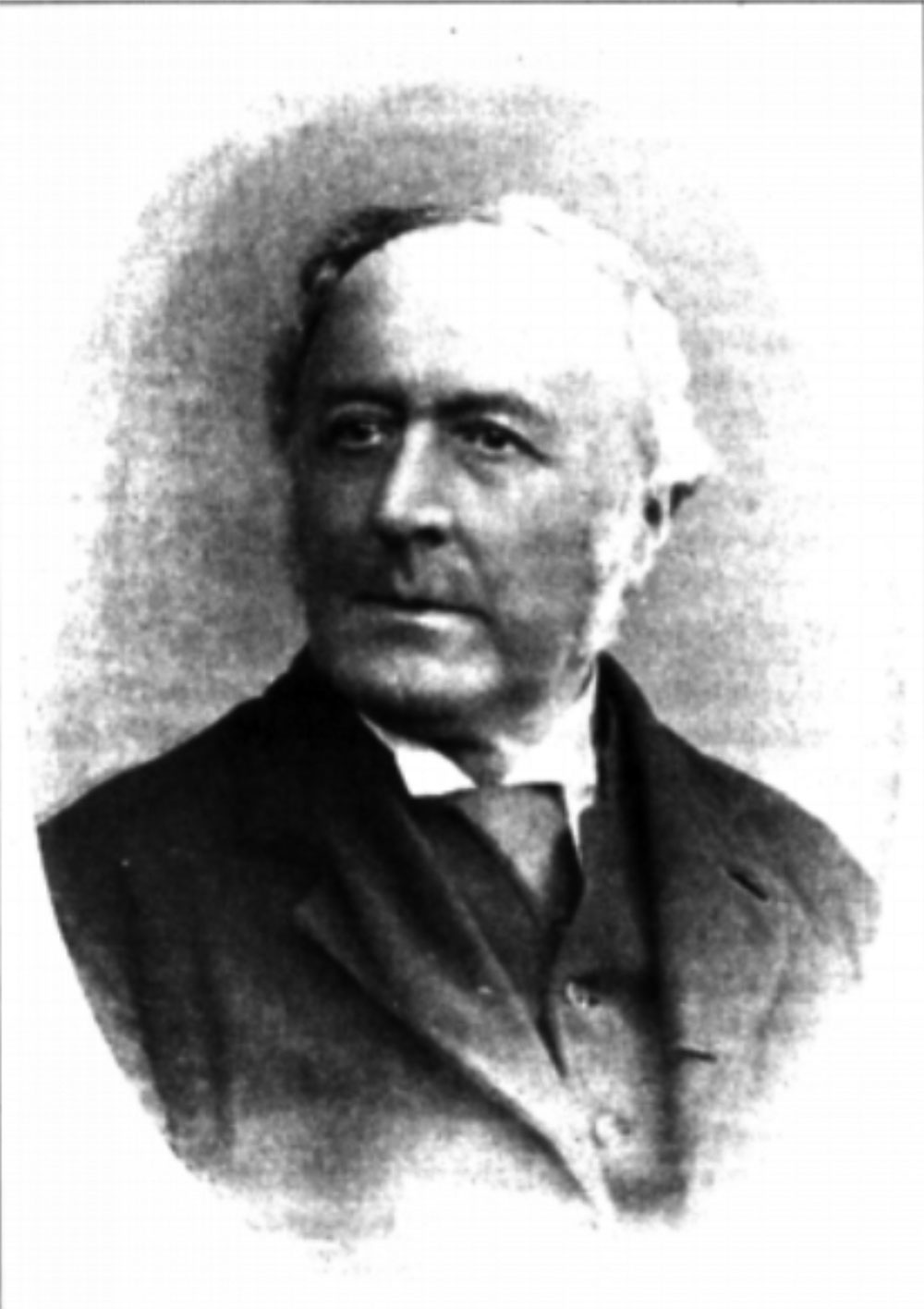
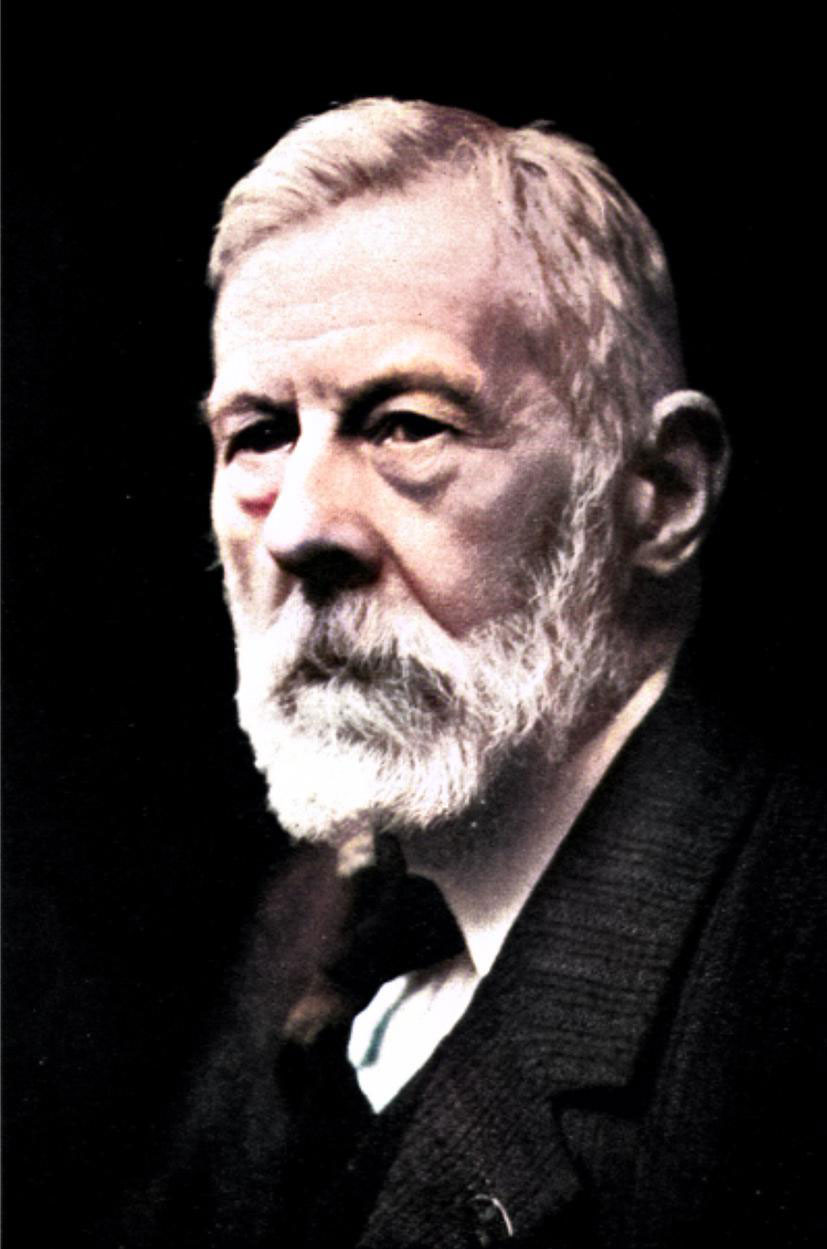
Charles Elcock, a native of Yorkshire was a professional microscope slide maker living in Belfast. Elcock was a member of the Belfast Naturalist Field Club, and became fascinated by the monuments at Carrowmore in the early 1880's after a field trip with the Club.
Charles Elcock.
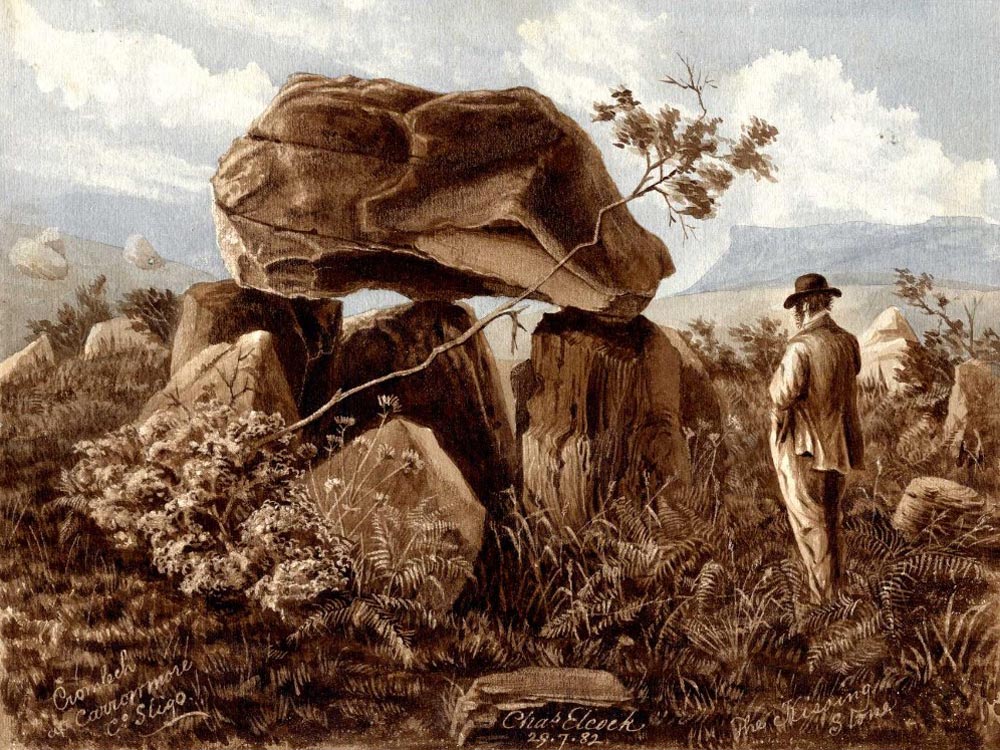
He made many visits to Carrowmore, and he interviewed locals to collect stories about the sites; it was Elcock who popularised the names the Phantom Stones for Monument 4 and the Kissing Stone for Monument 7. Elcock illustrated several of the monuments, sometimes with a large degree of exaggeration as with the image below. William Gregory Wood-Martin used some of Elcock's drawings to illustrate the Carrowmore section in his book, Rude Stone Monuments.
Robert John Welch was a professional photographer from Tyrone who ran a business in Belfast from 1883 and was one of Ireland's best known photographers. He was the official photographer for many big companies including the Belfast Ropeworks Company and Harland and Wolff, where he documented the building of the Titanic. He was a member of several notable clubs and societies including Royal Irish Academy, the Belfast Naturalist Field Club, where he served as president and where Robert Lloyd Praeger, Charles Elcock and William A. Green, who apprenticed with Welch, were fellow members.
Robert Welch.
You can browse through Robert Welch's impressive collection of over 4,000 images, many with fascinating archaeological content, at the National Museum of Northern Ireland.
William Alfred Green, a photographer from Newry, was an apprentice to Robert Welch before starting his own business in Belfast in 1910 and later in Antrim in 1924. He published two very successful series of postcards of Irish scenery which he called the 'Wagtail' series, a pun on his initials, W. A. G.
William Alfred Green from one of his own photographs.
Green was a keen member of the Royal Irish Academy and the Belfast Naturalist Field Club. He took a number of images of the Carrowmore dolmens on trips to County Sligo around 1910 and in 1911 he visited R. A. S. Macalister's excavations at Carrowkeel, where he photographed several munuments just as they were opened.
His only son died in tragic circumstances in 1921. The majority of his huge collection was taken over a twenty year span, and he seems to have followed in the footsteps of Robert Welch, photographing many monuments from the same angles. There is a short biography of Green on the Hidden Gems and Forgotton People website.
Göran Burenhult
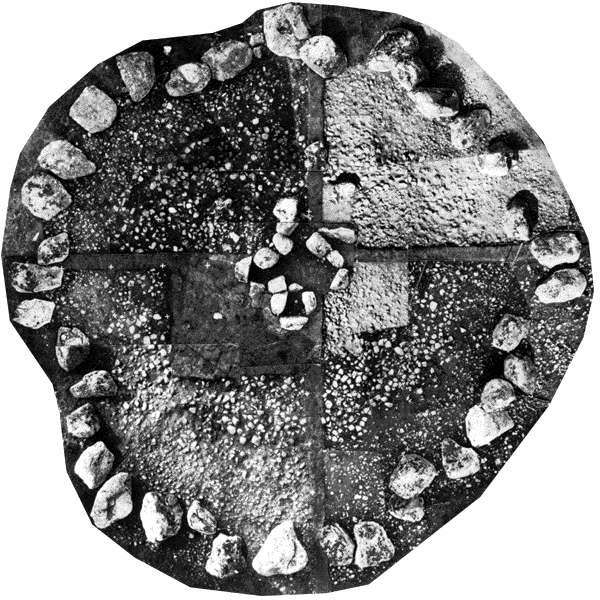
Göran Burenhult, a Swedish archaeologist led the first modern excavations at Carrowmore, which lasted from 1977 to 1982 and 1994 to 1998. Four monuments were excavated during the first series of digs, and six monuments, which included the large central monument at Listoghil, were partially examined during the second phase of excavations.
Burenhult found charcoal at a number of monuments which yielded early dates, such as 5,400 BC at Circle 3, and he went on to propose that the Carrowmore monuments were among the oldest megalithic chambers in Europe, developed and constructed by indigenous hunter-gatherers. This theory, falling well outside the accepted chronology of
passage graves, was never popular and was superceded by new research in 2012, when samples of red deer antler were used to date Carrowmore. More recent aDNA research has demonstrated that the passage grave people were colonists who originated in Anatolia around 8,500 BC.
Burenhult is to be thanked by the people of Sligo for helping to preserve Carrowmore from being used as a landfill in the 1980's, by highlighting the age and importance of the monuments. His papers and research on his excavations and work at Carrowmore have been published online at The Carrowmore Project.
Dr. Stefan Bergh
Dr. Stefan Bergh, an archaeologist from Sweden who worked on the Carrowmore digs with Burenhult. In 1995 he published his doctoral dissertation, Landscape of the Monuments, a modern summary and survey which covers the passage graves of Carrowmore and the Cuil Iorra peninsula. Dr. Bergh has excavated on both at Knocknarea and the in the neolithic hut sites on Mullaghafarna at Carrowkeel, and he has surveyed the large neolithic enclosure on Turlough Hill in County Clare.
Stefan Bergh showing the location of the blocking stone at the chamber of Listoghil in Carrowmore.
Dr. Bergh is a lecturer in Archaeology, NUI Galway, where he specialises in prehistoric archaeology. He is also Programme Director of the MA in Landscape Archaeology. Dr. Bergh's PhD research was focused on the passage tombs of Cuil Iorra in Co. Sligo. He has since then carried out extensive research on the Neolithic of County Sligo over the last thirty years, which has involved major surveys but also excavations in the Cuil Iorra region, where the Carrowmore megalithic complex is located.
Dr. Bergh has co-authored two papers on Carrowmore with Dr. Robert Hensey, with a third paper forthcoming. The first compares the Carrowmore landscape to the Carnac region in Brittany. The second was an important dating project, published in 2012 as 'Unpicking the Chronology of Carrowmore'. The Carrowmore monuments were re-dated using twenty-five samples taken from red deer antler which had been included in a range of cremations and burials, from the chambers of two monuments.
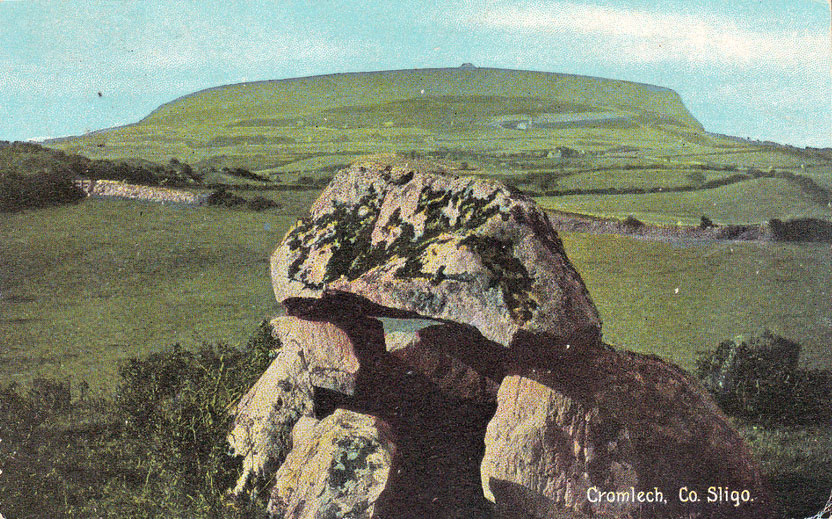
An old Postcard of Dolmen 7 at Carrowmore and Knocknarea.
The dates range from around 3,800 to 3,000 BC, and these dates, along with the dates from the causewayed enclosure at Magheraboy challenged Burenhult's theory that the monuments were the work of indigenous hunter-gatherers. Dr. Robert Hensey is an Office of Public Works guide based at the Carrowmore Visitor Centre.
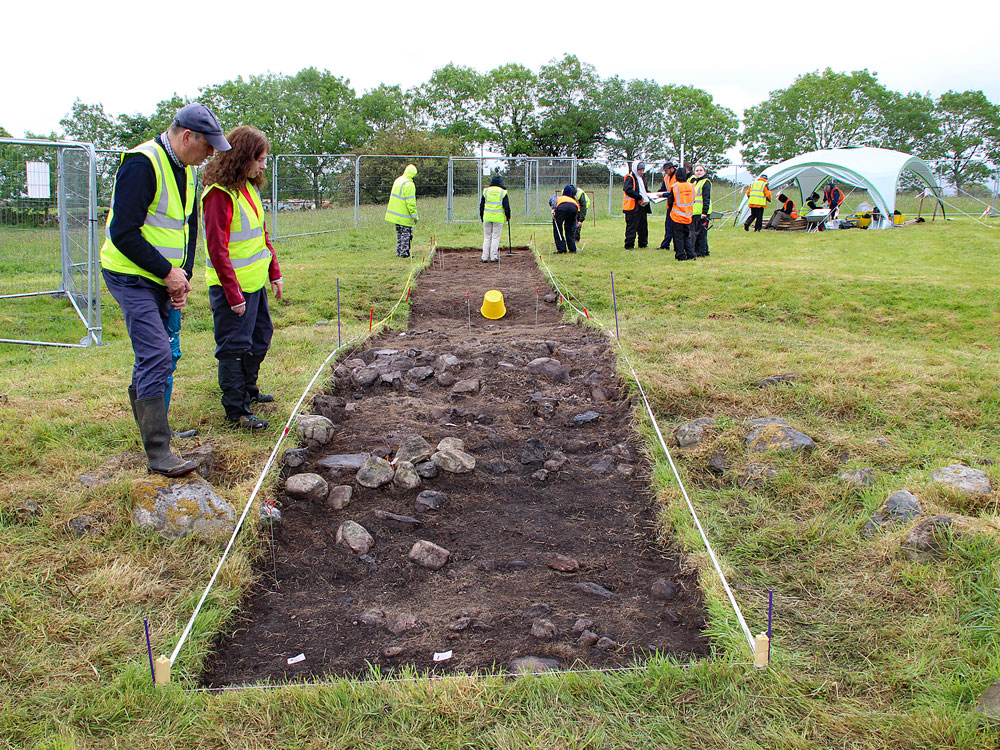
Excavation leader Marion Dowd examines the trench in 2019.
Dr. Marion Dowd and Dr. James Bonsall
A training and research excavation led by Drs. Dowd and Bonsall, both lecturers at Sligo IT, took place over ten days at midsummer of 2019. The monument chosen for excavation was thought to be some kind of bronze-age barrow, but turned up dates from the neolithic. The ten day excavation took place during some truly dreadful Irish weather, and a planned second season of digging was postponed due to Covid restrictions.
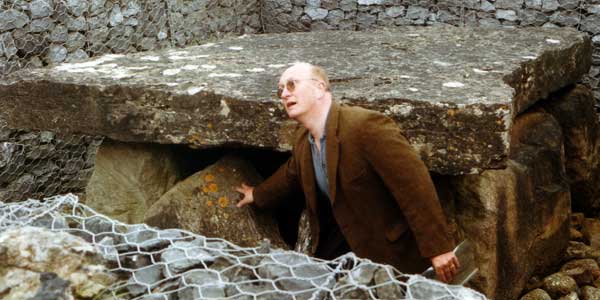
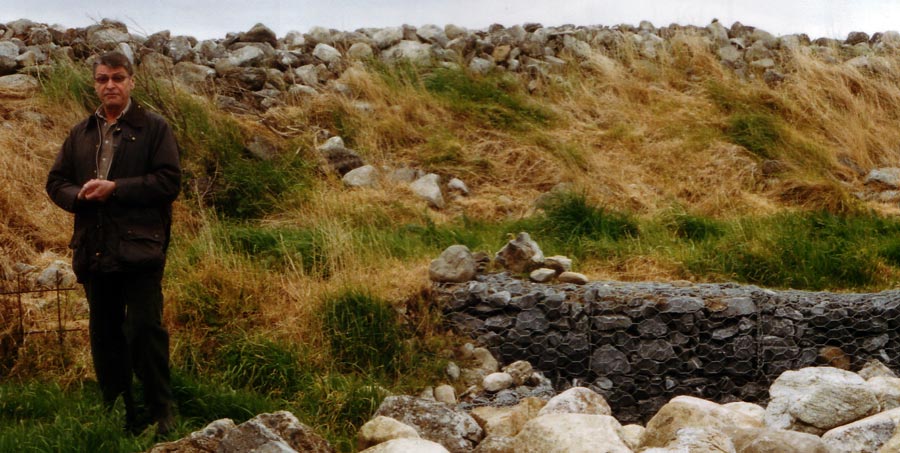
Dr. Göran Burenhult, the chief excavator of Carrowmore, at Listoghil, the central monument during the Stones and Bones conference in 2002. The site was undergoing 'conservation' at the time.